Dwarves in the Whirlwind: Slovenian Nature Spirits, Old and New
People in the Slovenian countryside once offered bread to the wind, imagined as a giant or a dwarf hiding in a whirlwind. Today the spirits of the landscape no longer demand offerings. They ask for help.
Proving that a medicine works is something independent researchers can do anywhere in the world. Proving the existence of dwarves, elves and other fairy beings is an almost impossible task. Yet they keep turning up whenever people talk about nature, and Slovenia is rich in them. They are one of the ways a culture keeps its landscape alive.
Bread for the wind
Zmago Šmitek traces the Slovenian škrati, dwarves and fairy beings, to an Indo-European origin and finds close links with the Indian tradition. Until the first decades of the twentieth century, in some places in the Slovenian countryside, people offered the winds from all four quarters a small loaf broken into four, or a piece of bread or meat, a handful of hay or blessed ash. The wind was imagined in human form, as a giant or a dwarf hiding in a whirlwind, much as a wind deity once mattered in Vedic India.1 It is a lovely gesture: a share of the household’s bread, given to the weather that brings the harvest.
Like the Icelandic elves, whose story is told in a companion post, the Slovenian spirits belonged to an old give and take between people and the land. Their roots run deep. People here once spoke charms against snakebite much like those of the Atharva Veda, and in one tale a clever cobbler knows that a dwarf must be struck only once, never twice, because a second blow would bring it back to life.2 Many spirits travelled with the wind. A dwarf or another being could ride in a whirlwind, and people answered it with a small offering, a way of keeping good relations with the forces around them.3
Spirits that ask for help
Šmitek notes that old people remembered seeing škopniki, witches, dwarves, the wild hunt and wandering lights in their youth, but hardly ever any more. People today, he believes, no longer have the time and patience to listen to the intuitive pulse of nature, and so they invent new myths, with heroes from comics, advertising, film and sport.4 I think the old spirits have not left. They have simply found new storytellers.
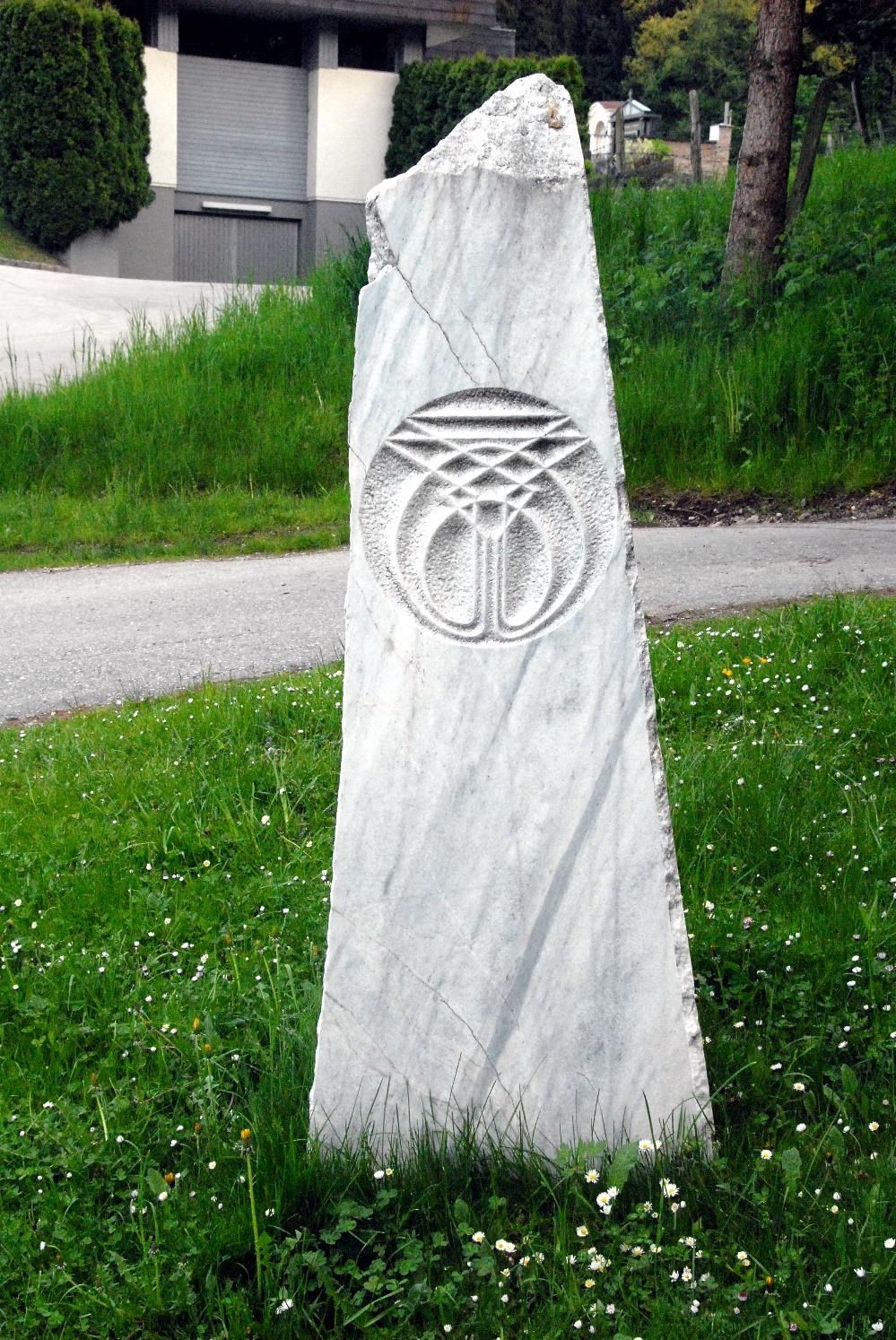
In recent decades a new-age version of the fairy beings has taken shape through the work of Marko Pogačnik, conceptual artist, member of the OHO group and, since 2016, UNESCO Artist for Peace. In his cosmology elemental beings live in the landscape, in streams, trees, mountains and plants, but the old relation is reversed. They are helpless in the face of human interventions and ask us for help. The forces of nature no longer demand offerings because they would otherwise be ill-disposed, but because they have grown feeble.5 With lithopuncture, modelled on acupuncture, Pogačnik sets carved stones into the land to heal its energy, from the Karst and Lake Bohinj to the park by the Delo tower in Ljubljana. He also designed the Slovenian coat of arms. In his view he is not adding anything to nature, only making visible a layer of the landscape that was always there.6
In its belief in the forces of nature, Slovenia does not lag behind Iceland. The stories change, from bread for the wind to stones that heal the land, but the feeling behind them stays the same: the landscape is more than rock, water and trees, and it deserves our attention and care. That may be the most valuable thing the dwarves still have to teach us.
Read the full section in the dissertation
Notes
- Paraphrased from Šmitek, 2012, pp. 292–293, as discussed in the dissertation (chapter 4). ↩︎
- Paraphrased from Šmitek, 2012, p. 303. ↩︎
- Paraphrased from Šmitek, 2011, pp. 186–187. ↩︎
- Paraphrased from Šmitek, 2011, p. 299; see the dissertation (chapter 4). ↩︎
- Pogačnik, 1986; Pogačnik, 1993; Pogačnik, 1996; see the dissertation (chapter 4). ↩︎
- On Pogačnik’s lithopuncture and the coat of arms, see the dissertation (chapter 4 and chapter 6). ↩︎