4. Why Must Aesthetics Not Interest Ecologists?
Besides the established positions within the aesthetics of nature itself, an important aspect is the connection of aesthetic approaches to the ethics of nature, or environmentalism. Above all because perhaps the most constructive criticism of the aesthetics of nature comes precisely from ethical and environmentalist circles – constructive in the light of the question that ethics poses to aesthetics: “What does contemporary environmentalism expect from the aesthetics of nature?” Ethics, as a normative discipline, of course expects tools and arguments for its work. On the other hand, we may also ask the question somewhat differently: which environmentalist facts should the aesthetics of nature take into account in order to be regarded as an appropriate aesthetic mode of appreciating nature? In our case the ethics of nature serves merely as a critical tool and categorial support. It has, namely, been developing for longer than aesthetics; there are some points of contact and intersections between the two, and environmental ethics is therefore entitled to pose uncomfortable questions to aesthetics.
Allen Carlson observes that the expectations of the ethics of nature can be combined into a few essential points. The environmental disciplines (in the humanities, of course; we are not speaking here of environmental engineering) demand of aesthetics:
a) that it be as acentric as possible, not anthropocentric;
b) that it be focused on the environment, not burdened with scenes and views;
c) that it be serious and deep, not shallow and trivial;
d) that it be objective rather than subjective;
e) and, last but not least, that it be morally engaged, not neutral or even morally indifferent (Carlson and Lintott, 2008, p. 12).
4.1. Acentrism, Not Anthropocentrism
All five points essentially represent general objections to the aesthetic appreciation of nature, among which, after the renewed interest in the aesthetics of nature in the second half of the twentieth century, considerable attention was devoted to the obsession with scenes and to shallowness and triviality. If we begin with the charge of anthropocentrism, we can establish that it stems from the fact that the aesthetics of nature is anthropocentric because of the picturesque – by far the most entrenched model of appreciating nature, which confirms anthropocentrism already by the fact that in such an approach nature exists above all as a source of pleasure and a means to our ends and needs. When nature does not correspond to picturesque ideals, to the picture, so much the worse for nature – we will change it. Carlson points to an (extreme) form of the argument that anthropocentrism in aesthetics can be charged not only to the picturesque but to aesthetic experience in general, since appreciation always takes place from the standpoint of an individual human being (Carlson and Lintott, 2008, p. 12). Anthropocentrism is an extensive and frequent theme in environmentalism and ethics, which in time also found its place in the aesthetics of nature. In 1994, in the article “Icebreakers: Environmentalism and Natural Aesthetics”, Stan Godlovitch presented an acentric approach to the appreciation of the natural world and proposed the mystery model. The first association with the mystery model is rejection and incomprehension, since our intuitions tell us that it is “unnatural” and unlivable. Immediately afterwards one might think of a similarity with deep ecology. Less than a decade after Hepburn’s article, namely, Arne Naess, with his treatise on deep ecology (Naess, 1973), was developing the thought of what “true” ecology should actually be, and thus also what an appropriate ethics should be. While shallow ecology and shallow environmental ethics advocate the technological cleaning of air and water, the even distribution of pollution and legally permitted levels of pollution, deep ecology treats pollution solely and exclusively from the standpoint of the biosphere. We humans must transform ourselves into the ecosphere and think in its stead, not only with regard to the effect it has for us and on us, but on life in general (Naess, 1993, p. 441).
Godlovitch’s acentric approach to the aesthetics of nature is even more radical than Naess’s defence of biocentrism in the ethics of nature. With the “acentric”, Godlovitch surprisingly criticises both biocentrism and anthropocentrism. Surprisingly, because once we deny “nature” biocentrism as well, not much is actually left of it. Not much of what? Of material for interpretation and for dialogue with the human being. Acentrism, in the sense of philosophically “getting one’s hands dirty” with a field such as nature, is in the end nonetheless an arbitrary decision – a principle caught in the dialectic of juggling between the concept and the non-concept. Radical acentrism means silence; it means looking away when we ought to be observing most attentively.
Regardless of this, it holds – and this is essential for understanding Godlovitch’s position – that biocentrism is in itself just as much an anthropocentric construct: any moral significance in the distinction between the living and the non-living is lost in acentrism. Mining on the Moon becomes morally at least as problematic as overfishing in the world’s oceans (Godlovitch, 2004, p. 110). The conservationist response to nature is culturally conditioned – preservation, the prevention of change and the redirection of events are characteristic of culture and human history, not of nature. For a proper aesthetic appreciation of nature we must be aware that nature is neither an artefact nor a quasi-artefact. We cannot “culturalise” nature, Godlovitch warns: we cannot pretend that it looks or behaves like the world of art without thereby creating a “denaturalised” artefact (2004, p. 110). What is essential is the realisation that, in his view, anthropocentrism floods and hijacks aesthetic responses to nature, and the real question is how to ground an acentric aesthetics. Godlovitch is convinced that even acentric environmentalism fails when treating nature as a whole, since despite everything it treats it as if it had a tradition, a history and individual parts. A true acentric environmentalism is, after all, not possible without an appropriate acentric aesthetics of nature. He offers the clearest explanation, if we can call it that, with the term “nature qua nature”. By the concept “nature as nature” he does not mean wilderness, although wilderness illustrates the notion. Godlovitch explains: “In brief, I use the notion at least to refer to the natural world as we might conceive it outside of our functional and explanatory categories, and to things and processes our conception of the existence and subsistence of which depend in no way upon any human agency”✓ (Godlovitch, 1998, p. 182). Godlovitch gives no satisfactory answer to the question of what an acentric aesthetics of nature should be like.
4.2. Environment, Not Landscape
From this point we can more easily understand the second charge, of being burdened with scenery, settings and views. A revolution in the aesthetics of nature often occurs when people begin to appreciate parts of nature that had been regarded negatively in the aesthetic sense, Saito is convinced, speaking of the picturesque approach, which encourages seeking out and appreciating above all the scenically interesting and beautiful parts of the natural environment. The result is obvious: environments with deficient pictorial composition, a lack of excitement and thrill (that is, those not worth representing in a picture), are considered aesthetically deficient (Saito, 1998, p. 101). As early as 1949, Aldo Leopold, too, declared in A Sand County Almanac: “It is inconceivable to me that an ethical relation to land can exist without love, respect, and admiration for land, and a high regard for its value.”✓41 Here Leopold has in mind more than mere economic value, namely “value in the philosophical sense”✓. Already in the middle of the twentieth century he warned that the educational and economic systems are headed away from an awareness of land, since for the modern human being it is merely one of the spaces on which crops thrive: “Turn him loose for a day on the land, and if the spot does not happen to be a golf links or a ‘scenic’ area, he is bored stiff.”✓ Leopold saw the possibility of the further development of ethics in the decision to stop thinking about land use as a merely economic problem. What is more, the “father” of the conservation movement42 is convinced that we must examine every question in terms of what is ethically and aesthetically right, as well as what is economically expedient. From this derives his best-known thought: “A thing is right when it tends to preserve the integrity, stability, and beauty of the biotic community. It is wrong when it tends otherwise”✓ (Leopold, 2010, p. 84). Grušovnik, reflecting on why Leopold created the land ethic at all, observes that as an employee43 of the US Forest Service he witnessed relatively unsuccessful conservation attempts based on state aid, subsidies and the like. In time he realised that there is only one solution: a change on the side of the individual, on the side of our “intellectual emphases, loyalties, affections, emotions …” (Grušovnik, 2010, p. 89). Here I openly flirt with the supposition that Leopold, too, helped to establish the role of aesthetics in environmentalism. It is particularly interesting that the best-known environmental thinker offered a critique of Carlson’s natural environmental aesthetic model several decades before it came into being. Grušovnik, too, points to his reserved attitude towards scientism and cognitivism in ethics. In Leopold’s thought there lies considerable intellectual modesty and reservation about the capacity of knowledge to solve the pressing problem of the overburdening of the environment; in the essay “The Land Ethic”, accordingly, Leopold is sceptical about our ability to know natural mechanisms precisely (2010, p. 89) – which is not a matter of doubt but an expression of intellectual humility when we truly confront the natural world. From recognising the beauty of the biotic community to the moment of extending the circle of moral responsibility so as to include plants, animals and ecosystems, the path is complicated. When (in keeping with our usual obsession with scenes and views) we are too quickly satisfied with certain scenic “compositions”, we look for views in the natural environment and often neglect environments that are ecologically interesting, varied and rich, such as bogs, wetlands, bays, oxbows, river banks and others. Such cultural conditioning cannot be successfully overcome by disinterested looking. Holmes Rolston III observes that the “countermeasure” is fairly obvious: we must experience nature. In his view, appropriate aesthetic appreciation of nature must include participation and, to some extent, even fusion with the environment (which is an open flirtation with Berleant’s model of the aesthetics of engagement). In the article “Aesthetic Experience in Forests” he takes issue with the scientific approach as insufficient. “Forests must be encountered,”✓ Rolston III points out, and adds that they are indeed “constructed by nature, and science teaches us how that is so”✓ (1998, p. 161). “Yet forests by nature contain no aesthetic experience; that has to be constructed as we humans arrive. Knowledge of the forest as an objective community does not guarantee the full round of aesthetic experience, not until one moves into that community oneself”✓ (p. 161). Aesthetic appreciation of nature, in his view, requires us to be in it with our body, to immerse ourselves in the natural environment, and for the whole process to involve a certain measure of struggle. For the most part we imagine forests to be a landscape to be viewed, observed and contemplated: “That is a mistake. A forest is entered, not viewed. It is doubtful that one can experience a forest from a roadside pullover, any more than on television”✓ (p. 162). Rolston III offers an interesting comparison. In a zoo, animals are in cages, because the keepers must make sure, with wires, iron bars and constructions, that the experience of their reality is prevented. If we return to the roadside pullover, cars, on the other hand, are “cages” for people. Contemplating a forest through a car window is like observing animals in a zoo: “The forest attacks all our senses – sight, hearing, smell, feeling, even taste. Visual experience is critical. But no forest is adequately experienced without the odor of the pines or of the wild roses …”✓ (p. 162). Rolston III has in mind a multisensoriality that we do not experience in the case of art. We hear the wind, see the treetops bending and feel it forcing its way through the zips of our jacket. Aesthetic experience is different when we are aware of the kinaesthetic sense of bodily presence, of the meaning of being incarnate in a place: “In the forest itself, there is no scenery, for example; we compose the landscape vista”✓ (p. 161).
Since some authors openly called for the rejection of the scenic approach, according to which we look for scenes, views and settings in nature, Donald W. Crawford came to the defence of the (land)scape model of appreciation. The advocate of the scenic-landscape approach offers answers to three major attacks on the landscape perception of nature (Crawford D. W., 2004, p. 256). The first attack seeks to show that scenic-landscape aesthetics cannot be part of the aesthetics of nature, since it is supposedly far too dependent on perspective and perception: “A landscape to be seen has to be composed, and to be loved has to be moralized,”✓ George Santayana points out in The Sense of Beauty. The natural landscape is “an indeterminate object; it almost always contains enough diversity to allow the eye a great liberty in selecting”✓ (Santayana, 1955, p. 83). Crawford rejects Santayana’s objection on the grounds that it confuses the physical point of view with a subjective view, or else relies on the (in fact) untenable position that we never really experience the world itself, but only our own impressions.
4.3. Depth, Not Triviality
The second attack on the scenic-landscape model claims that with it we do not experience nature as nature, but as art. In such a perception, the aesthetics of landscape is the aesthetics of the picturesque, in which we focus on surface properties as if we were observing the work of a creative mind. Historically this was painting; today it is calendars, brochures, photographs and digital images. Such an aesthetics does not “flow naturally from nature itself; … nor is it well informed by the ecological and evolutionary revolutions in natural history. It is superficial and narcissistic. In a word, it is trivial”✓, stresses J. Baird Callicott (Carlson and Lintott, 2008, p. 109). This is of course the charge, or objection, that the aesthetics of nature is simply shallow and trivial. It is precisely with the landscape-scenic model that we find the most charges of superficiality and triviality. Crawford replies to Callicott that, for fear of these, he must resort to additional aesthetic criteria in order to ground the experience of nature solely in the science of nature. By this very act he excludes expressive, associative, bodily and imaginative responses to nature, as a result of which we face a paradox: the scenic-landscape response to nature possesses an abundance of expressive and associative surpluses, yet is impoverished of natural-scientific objectivity. Conversely, the scientistic – that is, natural environmental – response is rich as regards natural-scientific knowledge, yet it lacks expressiveness and associativeness.
The third charge against the scenic cult is built on the fact that the landscape perception of nature does not include Berleant’s aesthetics of engagement, which we mentioned above. As Berleant writes, the history of the modern arts is more a history of perception than a history of objects; moreover, this perception is not merely a visual act but a somatic engagement in the aesthetic field (Berleant, 1992, p. 166). Crawford replies that this does not hold: [if] it is true that all perception is immersion in [and engagement with] the environment, then this can certainly also be so in the experience of landscape (Carlson and Berleant, 2004, p. 264). He is convinced that the analysis of the concepts of the aesthetic and of nature does not change the fact that when he enjoys a landscape, he enjoys nature, and does so in the aesthetic sense.
Crawford’s defences of the landscape treatment of nature are enthusiastic about a more comfortable and familiar path. We are used to scenes, to the perspectives of views or to compositions of landscapes in the style of the canvas. Such a response is safe and predictable. But stubbornly insisting that the landscape appreciation of nature is appropriate and in itself raises no aesthetic predicaments is unfruitful. The charges of the shallowness and triviality of such an aesthetic approach are justified. Hepburn had already noticed the difficulty in his groundbreaking article “Contemporary Aesthetics and the Neglect of Natural Beauty”. He asks where, in the aesthetic experience of nature, there is “any room for talking of ‘truth’, ‘depth’, ‘triviality’”✓ (Hepburn, 2006, p. 59). As regards truth, we find many appearances and illusions in nature, but at the same time he observes that the (aesthetic) experience of nature is aesthetic contemplation of apparent properties. Should it later turn out that they are not also actual properties, this may bother some people and not others: “For some people aesthetic experience is interested not at all in actuality—only in looks, seemings: indifference to truth may be part of their definition of the aesthetic”✓ (p. 60). In the passage already quoted above, Hepburn reflects: “Should we not be ready to say that this latter experience was less superficial or contrived than the other, that it was truer to nature, and for that reason more worth having? … If there can be a passage, in art, from easy beauty to difficult and more serious beauty, there can also be such passage in aesthetic contemplation of nature”✓ (p. 60).
Carlson observes (Carlson and Lintott, 2008, p. 14) that in the passage above Hepburn identifies the factors that ensure a serious and deep contemplation of nature. First, when he speaks of striving for an experience that is “truer to nature”✓. Second, when he proposes that aesthetic appreciation concern itself with the true nature of the object, rather than with admiring fleeting resemblances to things from everyday life – as, for instance, Hepburn describes watching clouds: “Suppose the outline of a cumulo-nimbus cloud resembles that of a basket of washing, and we amuse ourselves in dwelling upon this resemblance”✓ (2006, p. 60). And third, when he defends the passage from shallow to serious beauty by means of an analogy with aesthetic experience in art. Arguments of this kind are popular in the cognitive camp, which in the aesthetic experience of nature assigns the greatest role to knowledge and understanding of science and natural history.
4.4. Objectivity, Not Subjectivity
The charge that the aesthetics of nature is rather subjective and that for the most part we cannot speak of objectivity involves much more than a critique of the picturesque or of any other aesthetic approach to nature. The question of objectivity is relevant not only in the case of nature and natural environments, but also in the field of art and art institutions. Why so much concern about shallowness (above) and subjectivity? Carlson grounds his answer in the difference between shallow and serious appreciation. While serious, “serious, appropriate appreciation revolves around the object of appreciation and its real nature, while superficial appreciation frequently involves only whatever the subject happens to bring to the experience”✓ (Carlson, 2000, p. 7). In doing so he brings grist to the mill of his own natural environmental model when he adds that without a clear divide between subject and object, the aesthetic appreciation of nature quickly degenerates into first-person daydreaming. Why is objectivity important? The aesthetics of nature constantly flirts with the ethics of nature, and if it wishes to contribute aesthetic arguments to environmentalism, it must at least partly answer the charge of subjectivity.
Janna Thompson wants to point out how quickly the aesthetics of nature can become useless and irrelevant to environmentalism, at least as far as the protection and preservation of nature is concerned. Private whims and cultural ideals are a problem not only for ethics; they are also inappropriate for aesthetics. The problem is of course not new and goes beyond the aesthetics of nature, but in it it is (once again) revealed – or, as Carlson notes of a remark made by many authors: “even if we grant some degree of objectivity to aesthetic judgments about works of art, the justification of objectivity for such judgments cannot simply be extended to aesthetic judgments about nature”✓ (Carlson and Lintott, 2008, p. 15). With the desired objectivity by which we are to establish what appropriate aesthetic appreciation of nature is, Thompson, as mentioned, is aiming at Hepburn’s intuition of serious beauty. This is also a precondition for being able to discuss objectivity at all. As we see above, Thompson wants to show that objectivity provides the connective tissue between aesthetic judgements and ethical duties – between the aesthetic appreciation and the preservation of nature. An aesthetics of nature that is incapable of providing the foundations for preserving what we perceive as beautiful is not worth considering, Carlson (2009, p. 47) says in support of the desired objectivity. Not least because, while developing the natural environmental model, he had already pointed out, in the article “Nature, Aesthetic Judgment, and Objectivity”44 in 1981, the role of objectivity in the appreciation of nature in other cases. Like Thompson, he too spoke of a more serious form of aesthetic approach. Of course we can approach nature the way we sometimes approach art, Carlson wrote, adding that it is also true that we can simply enjoy nature in its shapes and colours, or enjoy it in whatever way we like. But if our appreciation is to be at a deeper level, and we wish to make true aesthetic judgements and at the same time be able to check whether they are true or false, “then we must know something about that which we appreciate”✓ (1981, p. 25). Certain factors force aspects and objects in nature under certain categories, so that we perceive them correctly only in those categories, Carlson was convinced, and he concluded: “And we must know how to perceive those aspects of nature and natural objects in the categories in question. This means that for significant aesthetic appreciation of nature, something like the knowledge and experience of the naturalist is essential”✓ (p. 25). Thus in a short passage of an early article by Carlson we find the germ of the natural environmental model, which he truly developed only at the turn of the millennium.
In mentioning categories we must add that George Dickie and Kendall Walton (see above) mentioned the aesthetic appreciation of nature in passing. It is even more important to point out that many models fail precisely on the requirement of objectivity. The most pronounced example of a model that fails with regard to objectivity is the so-called free model of appreciating nature. The model, following the ideas of Malcolm Budd and John Andrew Fisher, is based on the idea that the aesthetic appreciation of nature is characterised by a certain kind of freedom that does not exist in the appreciation of art. Budd asks what the aesthetic properties and aesthetic value of natural things actually are (he explicitly notes that he does not mean sequences and events) if we take them as natural. Here he points to Walton’s thesis about the relation between the aesthetic properties of a work of art and the category of art to which that work belongs. He disagrees with the interpretation that a work has such properties when a suitably sensitive observer perceives it in the correct categories of art: “This would not be sufficient because, first, the work might not be in its optimal condition, and, second, the conditions of observation might not be appropriate”✓ (Budd, 2002, p. 107). Accordingly, it is essential, Budd writes, that we understand Walton’s thesis correctly, namely in such a way that “a work’s real aesthetic properties are those manifest to a duly sensitive and well-informed observer who perceives the work in its correct artistic categories under the right conditions at the right time”✓ (p. 107).
In the case of art institutions such as galleries and museums, we know how to determine the right conditions, but what would the right circumstances be in a natural environment? The right time? Things get complicated already in determining the appropriate level of observation. A grain of sand, compared with other natural things, does not at first sight look particularly aesthetically interesting, Budd reflects, and adds that under a microscope – if with the naked eye we cannot “To see a World in a Grain of Sand / And a Heaven in a Wild Flower / Hold Infinity in the palm of your hand / And Eternity in an hour”✓ (Blake, 1998) – we can study its microstructure under powerful lenses, which is perhaps aesthetically more attractive than the grain itself. It is similar with a drop of lake water, in which we can discover a multitude of life forms under a microscope. Budd is convinced that positive aesthetics in the case of nature would be much more convincing if it defended the position that every thing in nature has positive aesthetic properties at some level of observation. Regardless of this, the level of observation is only one of the factors: there are also the distance from the object, the observer’s vantage point and the kind of light that falls on things and objects. In other words, in nature it matters at what time of day or night we observe something. Besides the fact that the appearance of natural things changes in accordance with different conditions of observation, natural things themselves change over time (they age or decay), as a result of which they can become aesthetically unattractive.45 What is essential, as Budd observes, is that the discernible aesthetic properties of a natural thing depend on the conditions of observation and on time.
In deriving the free model, Budd stresses that transferring Walton’s thesis from the field of art to the field of nature is problematic. Natural categories do not determine (not even partly) the real aesthetic properties of natural things in the way the categories of art determine them in the case of works of art. The categories of art determine the appropriate way of artistic appreciation, whereas Budd observes that natural categories do not prescribe an appropriate way of aesthetically appreciating nature. “The aesthetic appreciation of nature is thereby endowed with a freedom denied to artistic appreciation: in a section of the natural world we are free to frame elements as we please, to adopt any position or move in any way, at any time of the day or night, in any atmospheric conditions, and to use any sense modality, without thereby incurring the charge of misunderstanding”✓ (Budd, 2002, p. 108). When it is perfectly clear that an object is to be appreciated aesthetically as a picture, its weight, smell, taste, feel and temperature play no role whatsoever. But when it is clear that something is to be appreciated as a river or a tree, this in itself does not exclude various kinds of perception or other perceptual aspects of the object. If appropriate aesthetic appreciation is that which reveals the aesthetic qualities of an object and its aesthetic value, “then in general there is no such thing as the appropriate aesthetic appreciation of nature”✓ (p. 109). At least not in the sense that, if there is a determinate quality and value of a work of art, we know of no such determinate aesthetic quality and value of a natural object. But what are the aesthetic qualities and aesthetic value of a particular galaxy qua galaxy, a planet qua planet, a mountain qua mountain, a cloud qua cloud, a river qua river …, Budd asks. We are justifiably at a loss when we have to determine whether sunrise and sunset are aesthetic aspects of the planet as a planet or of the “rising” star. Is the reflection of trees in a river an aspect of the river or of the trees?
John Andrew Fisher defends a position very similar to Budd’s, but develops and derives it through a thorough reflection on natural sounds. These are a great puzzle for aesthetic theory, for although they are not music, singly or in concert they are often as interesting and rich as the sounds that occur in music. Some stir us emotionally, others are boring and unpleasant. “Our responses to nonmusical sounds of all types are thus often (perhaps most often) aesthetic. Oddly, in spite of the prima facie aesthetic value of many of these sounds, particularly the sounds of nature, aesthetic theory has largely overlooked them. Those interested in the aesthetics of nature have done the same”✓ (Fisher, 1998, p. 167). The gap between the indifference that (general) theory shows towards the sounds around us and the attention it devotes to music is in fact astonishing, Fisher reflects. Music is one of the most perfect art forms, high above the other artistic genres, and so one of the reasons for not dealing with random, uncaused and uncreated natural sounds is also that, for instance, great music is essentially sound that is made, crafted, re-created, delimited and defined, that has a theoretical basis, a code, a language and a communicative content for truly initiated and trained listeners. Someone handles and manages music. Natural sounds simply are, out there in an indistinct mass of energies moving randomly in the biomass. Fisher is convinced that natural sounds contribute to the aesthetic value of nature. At the same time he points to the absence of sound in theoretical engagement with nature.
The complex concert of natural sounds and the diversity of human capacities for listening to them allow all kinds of aesthetic approaches to their appreciation, all of them, in Fisher’s view, entirely appropriate. Thus in experiencing nature through listening he allows unlimited freedom: “The person who listens to nature is simply free of the criteria that govern appreciation of music and that function to rule out many possible ways of listening to musical soundscapes. Given that nature is filled with sounds, our freedom of appreciation of these sounds simply yields an even greater abundance to listen to”✓ (Fisher, 1998, p. 177).
Although both Budd’s and Fisher’s models have “intuitive appeal, they split aesthetic experience into two separate realms”✓ (Carlson, 2009, p. 44), thereby failing to follow an important concept in the field of the aesthetics of nature – Berleant’s idea of the unified aesthetics requirement. It is worth pointing out that some positions on the aesthetic appreciation of nature strive (at least partly) to embrace both art and nature, without trying to evade concepts such as “beauty” or “appreciation”. Carlson judges the idea of a unified aesthetics to be admirable (p. 42), since it pursues a goal that aesthetics in general strives for. What we need is not an aesthetics that cultivates two different kinds of phenomena, one of art and the other of nature, but an aesthetics of art and nature in which both in fact involve a single, all-encompassing experience that requires a comprehensive theory for its development (Berleant, 1992, p. 161). Moreover, it is more than obvious that Budd is not troubled by the relativity of his own approach. He calls the search for an appropriate model for appreciating nature and natural environments – one by which we would know what and how to appreciate, as we know well in the case of works of art – a quest that cannot be accomplished (Budd, 2002, p. 147). The “liberation” of his approach does not lie in some kind of untamed freedom of thoughtless wandering and self-abandonment but, as befits a philosopher, in a theoretical liberation. In art we know what to appreciate, and we know how to distinguish the whole of an artistic creation and its components from what is neither the creation nor part of it. At the same time we recognise the aesthetically relevant aspects of a work as opposed to features that are not aesthetically significant, and we are able to establish whether the work is to be listened to or looked at, whether we are to listen to a concert from a seat in the hall or stand in front of a painting in a museum, and the like. “The assumption underlying the search for a model of the aesthetic appreciation of nature is that some counterpart of our knowledge of art is needed that in the case of nature (or the natural environment) will answer the what and how questions about nature that we know so well how to answer in the case of a work of art”✓, Budd reflects. He is convinced that this is not so. First, in nature we have no corresponding problem of what to appreciate: in general we need no special knowledge to be able to distinguish a natural object and its parts from any other natural thing, and at the same time no aspect of a natural thing that we can in any way appreciate aesthetically can be described as aesthetically irrelevant. We can freely choose each natural object on its own or in the context of a larger group, for instance the ecosystem to which it belongs. We can also focus on a collection of natural phenomena, such as clouds in the sky, a flock of birds or a cluster of trees. “And, second, there are no constraints imposed on manner of appreciation—what actions to perform and mode of perception to engage in—in virtue of the natural category an item belongs to that parallel the constraints imposed by categories of art. Accordingly, there is no such thing as the appropriate foci of aesthetic significance in the natural environment or the appropriate boundaries of the setting … a freedom which means that much more is up to the aesthetic observer of nature than of art, a freedom which is one aspect of nature’s distinctive aesthetic appeal”✓ (pp. 147–148).
Fisher goes further still and explicitly rejects all demands for objectivity. As he observes, the greatest difficulty in the appreciation of natural sounds is precisely the idea that acts of genuine aesthetic appreciation must proceed in accordance with conventions of objectivity. Here he presents an objection to Carlson’s famous argument about the objectivity of aesthetic judgements about nature. In his early articles, namely, Carlson held that such judgements are objective in a way similar to aesthetic judgements in art. He assumed that some judgements about nature and natural objects (for instance “Triglav is majestic”) are appropriate, correct or simply true, while others (for instance “Triglav is chubby”) are inappropriate, incorrect and perhaps simply false. Carlson observes that accepting such a view immediately creates two camps. In the first, such judgements, of both kinds, are untenable in the case of nature and art alike. The members of this camp, in Carlson’s view, describe such judgements as subjectivist, relativist and/or non-cognitive. In the second camp, judgements of the kind “Guernica is dynamic” are regarded as appropriate, correct or true, but there are great reservations about judgements of the kind “Triglav is majestic”. Carlson (as already said above) seeks the guide that will play the same role as artistic categories play in the case of works of art: “We can, of course, approach nature as we sometimes approach art, that is, we can simply enjoy its forms and colors or enjoy perceiving it however we may happen to. But if our appreciation is to be at a deeper level, if we are to make aesthetic judgments which are likely to be true … then we must know something about that which we appreciate”✓ (Carlson, 1981, p. 25). What, then, is this guide? In his words, we must be aware that certain factors place aspects of nature and natural things in certain categories, and that we can perceive them correctly only in those categories: “This means that for significant aesthetic appreciation of nature, something like the knowledge and experience of the naturalist is essential”✓ (p. 25). Our society is convinced that nature is best described by natural science, and so the correct appreciation of nature is that which applies to the object of appreciation categories in accordance with scientific findings.
In the aesthetic appreciation of an environment, “we experience our surroundings as obtrusive foreground allowing our knowledge of that environment to select certain foci of aesthetic significance and perhaps exclude others, thereby limiting the experience,”✓ Carlson reflects in the article “Appreciation and the Natural Environment”, adding that there are certainly also “different kinds of appropriate acts of aspection which can likewise be selected by our knowledge of environments”✓. He cites Paul Ziff’s advice: “Ziff tells us to look for contours in the Florentine school and for color in a Bonnard, to survey a Tintoretto and to scan a Bosch”✓ (2008, p. 128), and compares it with different natural environments: “It seems that we must survey a prairie environment, looking at the subtle contours of the land, feeling the wind blowing across the open space, and smelling the mix of prairie grasses and flowers. But such an act of aspection has little place in a dense forest environment. Here we must examine and scrutinize, inspecting the detail of the forest floor, listening carefully for the sounds of birds and smelling carefully for the scent of spruce and pine”✓ (p. 128). Within the framework of the natural environmental model, Carlson observes that nature is an environment “and thus a setting within which we exist and which we normally experience with our complete range of senses as our unobtrusive background. But our experience being aesthetic requires unobtrusive background to be experienced as obtrusive foreground”✓ (Carlson, 2008, pp. 128–129). The result is the experience of a “blooming, buzzing confusion”✓, which can be brought into a more or less normal order through knowledge of the natural environment so experienced. This is also the main difference between Fisher and Carlson. Fisher sees aesthetic freedom in the abundance of such “confusion” and renounces objectivity, for it would be foolish to expect that it can be pursued at all. Carlson is convinced that in natural science we have an excellent tool for it, and demands order: “Our knowledge of the nature of the particular environments yields the appropriate boundaries of appreciation, the particular foci of aesthetic significance, and the relevant act or acts of aspection for that type of environment”✓ (p. 129). He is also convinced that the natural environmental model has “due regard for the nature of that environment”✓. Traditional approaches that tailor the appreciation of nature to some art form are unsatisfactory for Carlson, but his model nevertheless follows the general structure of our aesthetic appreciation of art. The natural environmental model does not assimilate natural objects to art or – more importantly for our case – landscapes to scenery, but depends on “an application of the general structure of aesthetic appreciation of art to something which is not art. What is important is to recognize that nature is an environment and is natural, and to make that recognition central to our aesthetic appreciation. Thereby we will aesthetically appreciate nature for what it is and for the qualities it has”✓ (p. 129).
For there is a danger that we are, as Hepburn warns, persons who pay very little attention to natural objects. Hepburn develops his thought on the assumption that there are important differences between natural and artistic objects, and these are precisely the foundation of special and valuable kinds of aesthetic experience of nature: “Supposing that a person’s aesthetic education instills in him the attitudes, the tactics of approach, the expectations proper to the appreciation of art works only, such a person will either pay very little aesthetic heed to natural objects or else heed them in the wrong way. He will look – and of course look in vain – for what can be found and enjoyed only in art”✓ (Hepburn, 2006, p. 51). Hepburn’s thought can also be read as a warning about what the primary problem of objectivity in the aesthetics of nature in general is, and what difficulties the free model conceived by Budd and Fisher runs into. At the same time it becomes much clearer why environmental ethics reproaches the aesthetics of nature with subjectivity and demands that it provide greater objectivity. The preservation of nature depends on our adequately measuring, or clearly determining, what we are supposed to preserve.
Fisher is clear about the influence of natural science, but he adds that among the existing languages for describing nature, the language of natural science happens at present to be the most precise and the most developed, which is why we believe that the appreciation of nature must be guided by scientific language. Although he is aware that Carroll does not reject Carlson’s natural environmental model and natural science (which Fisher admits only in a footnote), he nevertheless makes use of some emphases from Carroll’s article “On Being Moved by Nature: Between Religion and Natural History”.46 In it Carroll proposed the so-called arousal model: unlike the scenic model of appreciating nature, what we might call the arousal model does not necessarily place us at a distance from the object of our appreciation; it may be the way we are amid nature that has brought us into the state in which we find ourselves (Carroll, 2008, p. 137) – and he does not restrict our response to visual aspects alone. A waterfall moves us with its sound, weight, temperature and force; the sense of mystery aroused by a windy footpath, Carroll reflects, is connected with the process of moving along that path. Just as the object and scenic models seem to impose a frame on otherwise indeterminate nature, so the arousal model may similarly seem to involve us in imposing emotional gestalts on indeterminate natural expanses (p. 137). Carroll proposes an interesting solution to the problem of imposing frames. Some natural expanses have natural frames, or something he calls natural closure: caves, carcasses, hollows, clearings, trees, valleys, etc. Those natural expanses that lack such “closures”, or frames, possess features that are naturally salient for the human organism – for instance, running water and bright illumination, both of which we instinctively attend to. But where our emotional arousal is based either on natural closure or on natural salience, there is no great sense in saying that our emotional responses, centred on these features, are imposed (p. 137).
Carroll of course asks why we assume that there is only one model for the adequate appreciation of nature that applies to all cases – namely, the natural environmental model. The fact that the appreciation of nature may sometimes involve emotional arousals (visual, auditory or in the form of bodily sensations) that have nothing to do with scientific or common-sense ecological knowledge does not, in Carroll’s view, preclude appreciation at other moments from being shaped by the natural environmental model. Moreover, he is convinced that a similar situation also exists in artistic appreciation, since we can sometimes be emotionally aroused without knowing the genre or style of the work of art that triggers this state. But the existence of this kind of evaluative response in no way threatens the fact that there is a different kind of appreciation – the appreciation of informed connoisseurs – which involves placing the features of the work with respect to its appropriate artistic categories (p. 139). The author wants to point out that the same holds for the appreciation of nature. It is sometimes guided by the arousal model, sometimes by the natural environmental model, and on some occasions the two overlap. An emotional response can also arise from natural-scientific knowledge. What is more, Carroll clearly writes that he sees no reason why these two models should be the only ones appropriate for appreciating nature. Besides the fact that there are of course cases in which they do not overlap, there are certainly also cases in which some other – for instance the object – model is appropriate.
Fisher skilfully appeals to Carroll, since natural sounds are a unique case of such overlapping models. The calls of lost fawns can trouble us considerably; as children, for instance, we do not know that the woodpecker’s characteristic sound is the result of building a dwelling and not of something else. Because of “natural closure”, we can experience the sound of a babbling brook quite in isolation and as an object. Sometimes we even close our eyes and give ourselves over to the murmur of water in the middle of a forest or the roar of waves on the seashore. Sound introduces a measure of uncertainty into Carlson’s model. Of course we may be educated naturalists and recognise the scientific background of the calls of cicadas, understand how birds communicate their mating intentions and why wolves communicate by howling. But what about when – and on average this is often the case – we have none of this information and knowledge? Then we mostly respond emotionally, with the help of the imagination, or entirely spontaneously. Regardless of everything, this too is part of our “human nature” – or, as Carroll reflects on the moment when we stand near a waterfall, the thunder of falling water echoing in our ears, overwhelmed and stirred by its grandeur: we humans usually seek out such experiences. These experiences are, pre-theoretically, a form of appreciating nature … This requires no special scientific knowledge (Carroll, 2008, p. 137). In his words it requires only that, faced with the enormous volume of roaring water, we have an intuition of our own smallness: my basic objection to Carlson is that emotional arousal in response to nature can be an appropriate form of appreciating nature, and that the cognitive component of our emotional response does the work of determining those aspects of nature that are relevant to appreciation (p. 139). He observes that, for epistemological reasons, we conceive of the appreciation of nature as a kind of natural history: this position is successfully proposed as the only way to support our initial intuitions that some aesthetic judgements about nature can be objective. Moreover, any competing picture of appreciation – if it is to be taken seriously – must have resources comparable to those of the natural environmental model for solving the problem of the objectivity of appreciating nature (pp. 141–142). Carroll does not wish to propose the arousal model, with its principle of “being moved by nature”, as a competitor to the natural environmental approach. He prefers to think of it as a coexisting model and points out that such a feeling is not a residue of mysticism or religious experience, but is perhaps entirely instinctive. From allowing that our emotional responses to nature have naturalistic explanations, it of course does not follow that we return to the natural environmental model of appreciating nature … Perhaps we could appreciate nature à la Carlson from an evolutionary standpoint, where the focus of our attention is the interaction of our emotions with the environment, since we take this interaction to be shaped by the forces of evolution. But that is not what we characteristically have in mind by the notion of being moved by nature (Carroll, 2008, p. 148). Emotional responsiveness to nature is, in Carroll’s words, one of our characteristic forms of appreciating nature, which needs to rely neither on natural history nor on mysticism.
If we return to Fisher and his study of natural sounds, we can establish that he disagrees with Carlson and Thompson. He attributes to them the authorship of the demand for the objectivity of aesthetic judgements about nature: “The insistence that aesthetic responses to nature produce objective judgments, however, poses a problem for anyone wishing to take the aesthetics of nature sounds seriously. One reason is simply the familiar fact that people differ greatly in their responses to sounds”✓ (Fisher, 1998, p. 171). Carlson, somewhat mischievously, reminds us of the philosophical truism that “the fact of disagreement in responses does not establish the relativity of corresponding judgments”✓ (Carlson, 2009, p. 48).
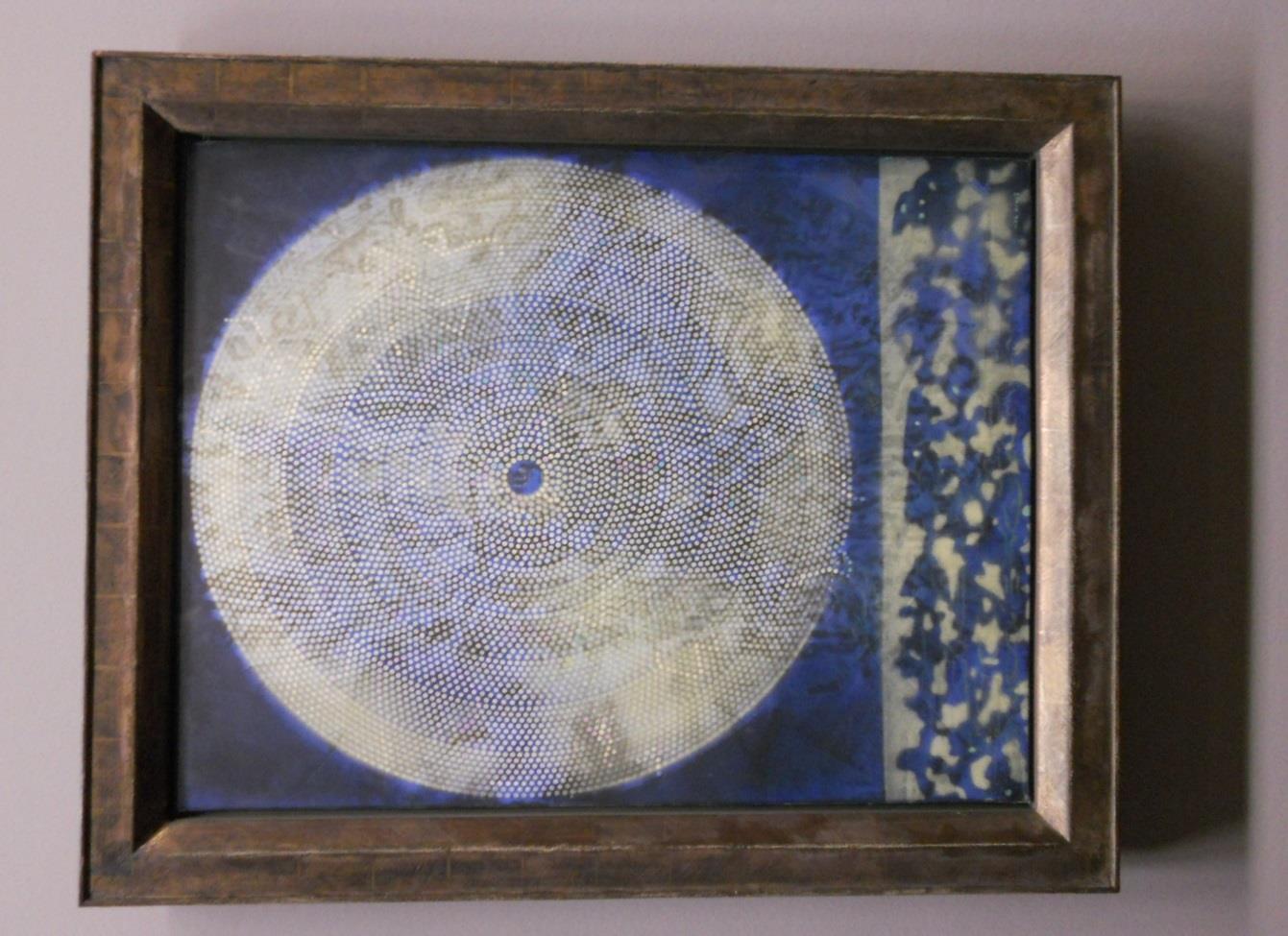
Amid all this talk of objectivity it must be stressed that the authors are not actually arguing about the objectivity of the judgements themselves – in the sense of who is right and who is wrong in pronouncing on the aesthetic value of nature. Objectivity in our case (in keeping with the analytic tradition) is simpler and more manageable. When looking at Max Ernst’s work Geburt einer Galaxie [Birth of a Galaxy] (1969), we know that it belongs to the Surrealist genre, in the technique of oil on canvas. We understand, at least in outline, Ernst’s life story, the context of the development of his artistic personality, humanity’s landing on the Moon in the same year, and Ernst’s transfer of the technique of frottage (transferring the texture of an object lying beneath paper or canvas) into painting and its use in collages. The work looks as if Ernst had placed beneath the canvas a circular piece of perforated sheet metal and painted it. At first it seems naive and simple, but because we know what we are looking at, we are able to appreciate the canvas objectively. A person without such knowledge cannot claim this. Such a person can of course, if they grasp in principle that it is a work of art, interpret its meaning entirely in their own way, but with Ernst’s symbolism the title of the canvas is already a great help, let alone the artistic and institutional context.
It is similar with “objectivity” in the case of nature. We are looking at a tree, not at shrubs. We are listening to birds, not to wolves. We agree that there are clouds in the sky and not, say, tufts of cotton wool. Why is this important? I am convinced that in the appreciation of nature a similar kind of random quasi-interpretation and quasi-religious experience is entirely possible, one that has nothing to do with nature and that we ought somehow to name in order to distinguish it from the other models of the aesthetics of nature. In the case of nature I do not wish to open up merely the representational problem between picture and object – I would like to go a step further: nature itself must represent the picture, and if it cannot, so much the worse for nature. Most people are not capable of seeing trees, shrubs, birds and wolves, because they bring a cultural pre-education to them. Kante, too, in explaining conventionalism, points out that pictures often involve conventions or codes. The conventionalist approach relies on the undisputed observation that different pictorial systems exist. For example, the ancient Egyptians used different conventions of representation from the Italian painters of the High Renaissance … It is also often claimed that people from different cultures, steeped in their own systems of representation, have supposed difficulties in understanding representations in alternative styles. It has been reported that people from tribes in Africa had difficulty recognising what was in photographs. To understand the pictures of other cultures – so the conventionalist argues – the observer must learn the appropriate pictorial systems (Kante, 2001, p. 72). Today we are taught the “appropriate” pictorial system of nature through Disney cartoons, National Geographic photographs and BBC documentaries.
In the dialogue between Carlson and Carroll we are, admittedly, witnessing a conversation in which the two are rather far apart. The two authors are each at their own end of a fan of examples, and they hardly allow for the possibility that approaches mix, overlap and alternate. At the same time, as we listen to Carroll talking about emotional arousal and about how nature moves us, and to Carlson about how science should guide our approach to nature, we can establish that there are also entirely different kinds of (supposedly aesthetic) interpretations of nature. The analytic tradition rejects them from the outset; the phenomenological tradition could at least consider them.
We often set off to a museum or gallery without appropriate knowledge of and acquaintance with the subject we are going to see, and I contend that the natural environmental model faces a similar difficulty. Just as most art is experienced uninformed, so most natural environments are experienced quite spontaneously and without real knowledge of what we are actually appreciating. I find it hard to imagine that people (even the professional handful of aestheticians of nature) would ever truly know enough about natural science – though this of course does not mean that such a goal should not be pursued. On the other hand, we may justifiably doubt the aesthetic inspiration of naturalists and other scientists who have never encountered philosophical reflection in their lives. We can always learn again about a natural phenomenon that stirs us aesthetically. At the same time I am convinced that the natural scientist is also a prisoner of his own knowledge, because of which he can no longer experience nature in the many other ways in which those of us who lack this knowledge can experience it. Regardless of this, there is a great difference in the baggage and the psychological projection with which we set off into nature. Some forms of appreciation – namely those that encourage quasi-interpretations and quasi-religious experience – can vividly illustrate how hard it is to draw boundaries between individual models and how rudimentary the demand for objectivity really is. Carlson’s approach wins because in today’s world natural history and natural science are the most objective forms of knowledge we possess. We can argue about whether the term “ecosystem service” is a product of science that arose under the implicit influence of capitalist ideology, and whether in nature we cannot really speak of “services, mass, stores of value, capital, production, exchange and chains”; but when we fall seriously ill and are saved by some powerful medicine or therapy, the debate about objectivity is quickly concluded. The (in)effectiveness of an antibiotic can be checked by independent researchers in different parts of the world, whereas proving the existence of dwarves, elves and other fairy beings is an almost impossible task.
People in various parts of the world believe, namely, in beings that in my view represent the “face” of nature. When we supposedly fail to do something right, such expressions of personified nature reveal themselves to us, or some misfortune befalls us. In Iceland there are numerous ethnological records of testimonies of how construction workers who destroyed the dwellings of otherwise invisible elves died in strange accidents or had enormous bad luck later in life. In his ethnological analysis “The Elves’ Point of View”, the ethnologist Valdimar Hafstein lays out the background of beliefs which, in his view, constitute the fabric of national identity and social cohesion. A survey in 1998, namely, showed that more than half of Icelanders believe in the huldufólk, or hidden people. The history and geography of the country are the perfect backdrop for elves and fairies. The word álfar, or elves, is first mentioned in records from the Viking Age, some thousand years ago. Today several thousand people gather at protests against the construction of roads or infrastructure in areas where elves are said to live (Jacobs, 2013). In claiming that the conception, design and form of the supernatural reflect the culture that imagined it, we say nothing new. The example of the elves in Iceland is interesting for this dissertation because – although they are invisible to most people47 – they represent an aesthetic supplement to the landscape. The Icelandic landscape is not “real” without the remainder, or surplus, of the imaginative supplement of the life and influence of the elves. At least on a trivial level, the supposition of the existence of elves is an inseparable part of the “aesthetic identity” of the landscape – as if the empty and barren land of volcanoes, grasslands, mountain ranges and rivers needed a mysterious “spice”.48 Hafstein observes in an excellent analysis that the otherworld must not be understood as a mere extension of this world. The Icelandic elf tradition shows that it is the counterpart, co-creator and borderland of the human community: “Elves represent nature in the heart of culture; the places attributed to them are wilderness in the midst of cultivation. These places – rocks, hills, ponds – are taboo, they must not be fished in, messed with, moved or mowed; they must not, that is to say, be brought into culture”✓ (Hafstein, 2000, p. 89). The elves of Icelandic tales and folk beliefs are an excellent specimen of nature spirits and represent a general paradigm that can be traced through the fairy tales of the European tradition. In my view, it is precisely the tabooisation of “pristine” nature and “wilderness” that is the aestheticisation of such a surplus. The absence of a logical justification is replaced by an aesthetics of taboo – of something better avoided and better left to the “forces of nature”, in the hope that this will appease them. The present shows that such an experience of nature is still alive, which represents interesting material for discussion for the aesthetic models described above. A similar phenomenon can also be observed in art institutions and galleries. People think and experience whatever it is they think and experience. The institutionalisation of the aesthetic experience of nature will not easily rid itself of the shackles of mythology.
Dwarves and fairy beings are also present in Slovenian mythology and tales. In his works Šmitek conscientiously draws connections with the Indian tradition and establishes their Indo-European origin. In connection with the worship of natural phenomena he mentions the Slovenian custom of offering food to the wind, which recalls the former significance of such a deity in Vedic India: until the first decades of the twentieth century, in some places in the Slovenian countryside, people offered the winds from all four quarters of the world a small loaf of bread broken into quarters or, more simply, a piece of bread or meat, and also a handful of hay or blessed ash … The wind was imagined here (and in many other places in Europe) in anthropomorphic form, as a giant or a dwarf hiding in a whirlwind (Šmitek, 2012, pp. 292–293). Unlike the Icelanders, we Slovenians had a somewhat less relaxed relationship with dwarves, which can partly be attributed to geography. Iceland, unlike our lands, being an island, had no snakes. The old inhabitants here protected themselves against snakebites with special charm formulae, typologically very similar to those in the Atharva Veda. They turned to the demonic ruler of all snakes: the demon can be killed only with a single blow, since a second blow would restore him to life. This was believed by the Indo-European Kafirs of the Hindu Kush, and also by the Slovenians. According to the Slovenian variant, the cobbler who struck a dwarf knew well that an evil being must never be struck twice, because this would be a man’s undoing (p. 303). According to Valvasor, the vedomci represented evil spirits, and because they lived outside the human environment, Šmitek writes the name with a capital letter. In connection with Austrian folklore, the Vedomec could also be a sorcerer, which again shows him as a being dangerous to humans. He could make himself invisible and could be perceived as a gust of wind: When the winds clash and a whirlwind arises, it is the Vidóvina doing it. She also carries the harvest away from land to land. But this again was not only his characteristic, since a dwarf, the devil or witches could also appear as a whirlwind (Šmitek, 2011, pp. 186–187); whichever demon was hiding in the wind, however, it always, as the author observes, demanded offerings.
This is why we can understand, Hafstein observes, why the Icelandic elves of the present day are “always directed against development – housing development, infrastructure, factory construction and other projects contributing to urban expansion”✓ (Hafstein, 2000, pp. 92–93). In the as a rule closed and homogeneous Icelandic society, attention to what the elves supposedly think is paid by radio stations, newspapers and television, and the protagonists of the most popular tales and legends are road workers – and not without reason: “Roads are the matrix of modernity. Communications are modernity’s first condition and first priority, its conduits and its concretions. Their development heralds a reconfiguration of space – if the ‘local’ as a category is created through interaction, roads reshape its conditions by transforming and extending interactive space. Road construction, therefore, transgresses the boundaries of the social order that predates it. Roads open up the inside to the outside, bringing others into one’s own domain. They blur the borders maintained in traditional metanarratives of community”✓ (p. 94). For several centuries the elves in tales and legends were a mirror of the human community, but in the twentieth century human society, through modernisation, changed its economy, demography, means of communication and culture. The elves remained the same, for seers report the clothing, tools and way of life of a peasant, pre-industrial society; the reports, with the absence of any signs of modernisation in elf civilisation, speak for themselves. In keeping with Hafstein’s findings, we can also understand the elves as the “invisible Amish” of Icelandic civilisation. “The farmer is the paradigmatic Icelander; rural origins and experience of farmwork are a popular index of the authenticity of people’s ‘Icelandicness’ … Thus, the elves, as a rural traditional population, are eminently Icelandic. They are, I would argue, a representation of Icelandic cultural identity”✓ (p. 98). And with this also a symbol of the striving for pristine and true nature, the striving for a “right” way of coexisting with a true, contented and “happy” nature.
A somewhat different “face of nature” has taken shape in Slovenia over the last thirty years, with a new-age version of dwarves and fairy beings, through the work of Marko Pogačnik – conceptual artist, member of the OHO group, academic sculptor and, since 2016, also UNESCO Artist for Peace. Several centuries after the tales of demonic nature came into being, the relations have been reversed. In Pogačnik’s cosmology of elemental beings (Pogačnik, 1986), who dwell in the landscape, streams, borderlands, trees, mountains and plants, dwarves and other fairy beings are helpless in the face of human interventions in nature and communicate above all pleas for help (Pogačnik, 1993). With the method of lithopuncture and the geomantic ordering of the landscape, Pogačnik seeks to realise a cosmic balance between the invisible and the visible world: the harmonious levels of the elemental beings of fire, air, earth and water, and the inharmonious levels of human existence (Pogačnik, 1996). The invisible beings, the ailing Goddess and the forces of nature no longer demand offerings because they would otherwise be ill-disposed, but because they have grown feeble.
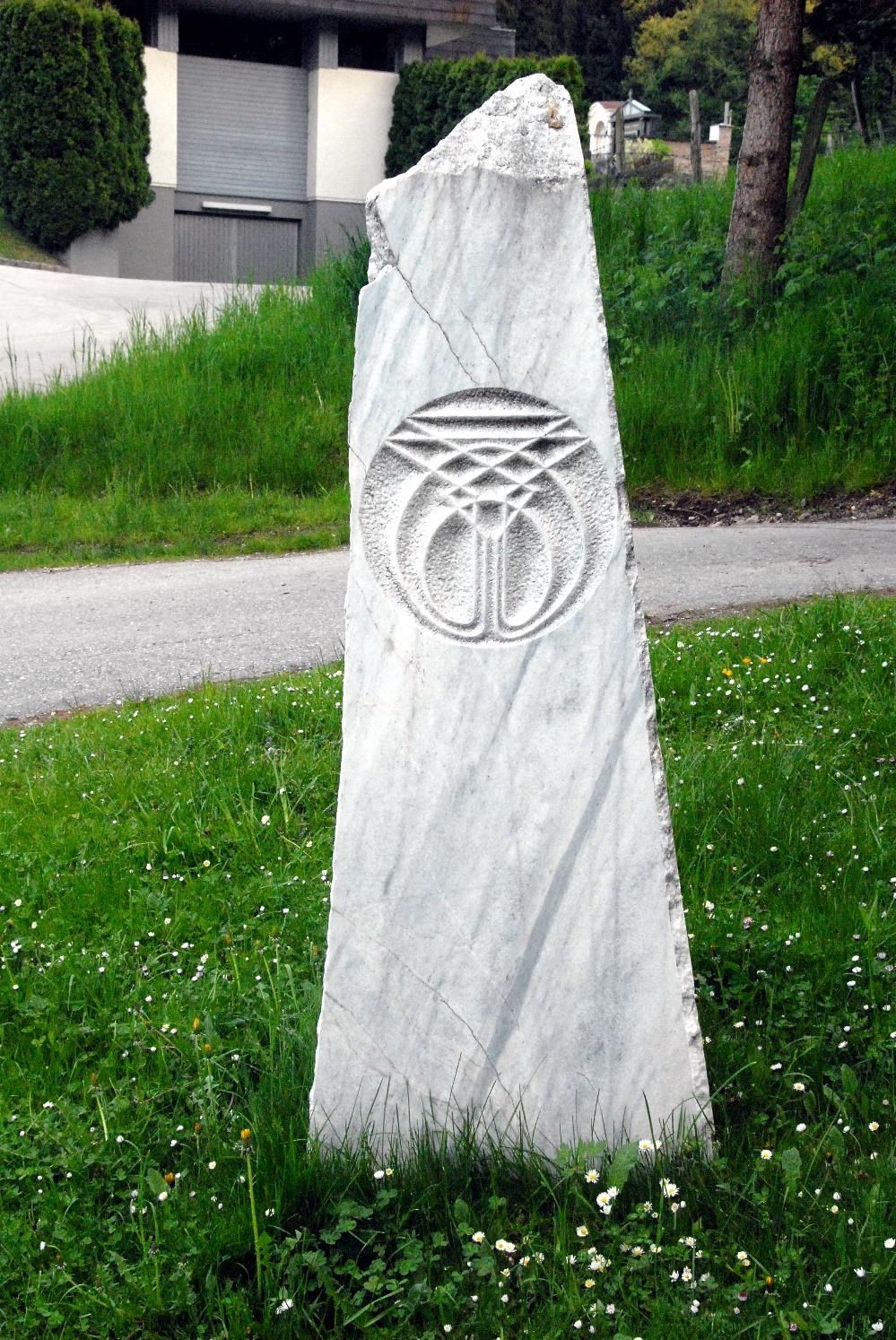
In a time of ecological disintegration they ask for help. The elemental beings no longer reflect human society, nor do they lag behind modernisation, since they represent the inseparable intelligence of the natural world, which is capable of communicating with sufficiently attuned and initiated individuals. Pogačnik’s work as a healer of the Earth and as a sculptor who, on the model of acupuncture, regulates the Earth’s energy network by means of lithopuncture is intriguing, since through geomantic education he has managed to gather a group of followers who continue his work with him and independently. In its belief in the forces of nature, Slovenia thus does not lag behind Iceland – especially when we realise that Pogačnik, in accordance with his idiosyncratic cosmology, designed the Slovenian national coat of arms and, on its basis, reinterpreted the meaning and role of the Slovenian landscape from Triglav to Bled, Bohinj, the Karst, Ljubljana and other areas of Slovenia.
Pogačnik’s early period must be distinguished from his late work, and somewhere in the middle, with the design of the Slovenian national coat of arms, he left, in my opinion, a historical trace that speaks eloquently of the Slovenian relationship to nature and of a superiority aesthetics of landscape. With its pilgrimage sites, its tradition of Christianity and the unique historical story of its independence, Slovenia is, in the consciousness of its cultural identity, a kind of “land chosen by God”. A large part of this pattern is also its rich natural heritage, which, in confrontation with the identities of older, larger and stronger nations, became a handy store of superiority. O homeland, when God created you, He blessed you with both hands and said: “Here shall live merry people!” He measured out beauty sparingly as He scattered it over the earth from east to west; He passed by mighty lands and did not look at them – they lie barren there, staring at the sky with blind eyes and begging for mercy. At last He had a full palm of beauty left; He scattered it to all four sides, from the Styrian vineyards to the steep Trieste coast and from Triglav to the Gorjanci, and said: “Merry people shall live here; song shall be their language and their song shall be rejoicing!” As He said, so it came to pass. God’s sowing sprouted and bore fruit – heaven grew beneath Triglav, Ivan Cankar wrote of Slovenia in Kurent (1909, p. 16). It is no different today. In the Slovenian coat of arms there is a similar aesthetic inscription, except that it must be read in a visual language. Pogačnik grounded it as a “cosmogram”, which in his artistic idiom means relief or pictorial signs that introduce healing energy into a space; the energy introduced by the cosmogram of the Slovenian coat of arms is thus energy that supports Slovenian identity. For this reason the author of the coat of arms did not take the ideas for it from historical messages, symbols and other signs; rather, for him the coat of arms is simply a holistic inscription of the space in which Slovenia exists – a kind of imprint of it (Government Communication Office of the Republic of Slovenia, 2011). As his basis he drew on two works of art: Prešeren’s poem Krst pri Savici [The Baptism on the Savica] with its introductory image, through which the symbolic space of Slovenia was structured via the poet: Triglav above the surface of Lake Bohinj with golden light above the mountain; and Plečnik’s column of the Virgin Mary, which today stands in front of the parish church in Bled, where the figure of the new Slovenian coat of arms first appears on Mary’s mantle, with Triglav and a six-pointed star above it (2011). The cosmogram consists of three main axes originating from Triglav: the axis of wholeness in the direction of Istria; the creative axis in the direction of Ljubljana to the Kolpa in Bela Krajina, or the village of Rosalnice; and the axis of transformation across Slovenj Gradec via Murska Sobota to the border with Hungary. At the same time, the coat of arms encompasses all the elements of space: the element of air (blue sky), the element of fire (golden stars), the element of water (the waves) and the element of earth (the mountain). All these elements, together with others, bring two fundamental messages. The first is: “Slovenia is a land where heaven and earth are connected and balanced”, and the second: “The male and female poles of existence are polarised and balanced. Thus a creative tension arises between them that stimulates development and transformation in the land.” Visually, the triangles culminate in an image that can be identified as Triglav, and in stars that can be understood as the stars of the Counts of Celje, which is necessary for a national symbol that needs a historical background. In principle, however, this is the energy field of the earth connected with the energy field of the cosmos, since without this connection the land cannot live (2011). In Pogačnik’s coat of arms, Slovenia is an image of cosmic balance. It represents an ideal that other nations have yet to attain, while here it is realised and alive in the ideal landscape of Triglav, lakes, rivers and the Karst underground. Such a representation of the aesthetic relation to landscape is certainly a first-rate challenge for the aesthetics of nature. Of course the function of a coat of arms is to transcend reality, and Slovenia is not the first country to proclaim its natural features in its coat of arms, but it is the first to proclaim a paradisiacal image of nature.

Šmitek, using the example of one of the Slovenian tales, a parallel to which we find in Belarus, mentions how the old pagan giant taught his daughter, who had brought him ploughmen to show him: These are people, a breed that will remain, while we shall all die. It seems that this prophecy has recently been fulfilled, since old people remember that in their youth they themselves still saw various fabulous beings (škopniki, witches, dwarves, the wild hunt, wandering lights and the like), but now hardly ever (Šmitek, 2011, p. 299). Šmitek is convinced that people today no longer have the time and patience to listen to the intuitive pulse of nature – and what we do not perceive does not exist. Soon only archival records and books such as ours will tell of all this. Meanwhile, human imagination will seek new and different paths for releasing the mythological potential that is surely still within us. In forgetting the old ones, we “invent” new mythologies, Šmitek is convinced, and he points out that the heroes of contemporary myths are characters from comics, advertisements, films, sport, literature and show business, as well as political mythology (p. 299). Judging by the opinion survey in Iceland and by Pogačnik’s projects – with which he has managed to sow the country with lithopuncture projects, among them, on Slovenia’s accession to the European Union, in the park by the Delo tower in Ljubljana – it seems that Šmitek gave up too quickly and too soon. We invent new mythologies, but these are not very far from the old ones. In this respect such phenomena represent an aesthetic surplus – a remainder that stubbornly forces itself into the equation of the contemporary aesthetics of nature and reminds the discipline that, beyond the walls of culture (of the analytic tradition), the mythological demons of the past are roaming. And the more we close our eyes to them in the search for objectivity, the stronger they become. In the light of what has been said, I also add a model of my own for appreciating nature. I call such models projection models, since their material is not nature but our projection into it. In my view they represent an extensive range of actions, relations and approaches to nature that again and again interfere with philosophical-aesthetic approaches.
I made this extensive detour, or sub-discussion, on elves, the Slovenian coat of arms and Pogačnik’s cosmology, in treating the question of the extent to which the aesthetics of nature can be objective, for a clear reason: I wish to show that, on both the personal and the national level, there is still far from being a clear canon of the aesthetics of nature – at least not one with which we could know, even approximately, what we are talking about. After long reflection and weighing of the models, it makes sense to add the projection model to the existing ones. As we have already mentioned above, it was implicitly indicated by Yuriko Saito in the important article “Appreciating Nature on Its Own Terms”, who defends the position that we should “listen” to nature and its story, but does not say how we are to do so. She focuses on the historically significant example of the American perception of landscape in the nineteenth century, when we can observe in nature writing a conscious effort to present uninteresting areas of the American landscape as attractive, remarkable and worthy of appreciation. On the model of the European associationist theory and psychology of the time, the value of an aesthetic object lay above all in the series of ideas it was capable of evoking in the observer. “Adoption of this associationist theory caused nineteenth-century Americans a great deal of anxiety because American landscape, in general, unlike that of Europe, was considered lacking in historical and literary associations. Consequently, the American landscape was frequently described as ‘barren,’ ‘vacant,’ ‘dull,’ and ‘destitute of taste’”✓ (Saito, 1998b, p. 139), whereas in the European landscape every nook and phenomenon had a genuine, or at least a romantic, legend. Kante mentions the lively, here and there even fierce debate about whether nature should be seen as an allegory or as a symbol, which took place in Romanticism and whose outcome was not unambiguous, univocal and conclusively settled (Kante, 2009, pp. 136–137). He points out that associationist psychology was part of the Enlightenment conception of the world, whereas expressivism in art was supposedly one of the elements that sought to refute this conception. The expressivist critique understood human existence very differently from Enlightenment anthropology: expressivism does not regard human life and activity as something meaningless, but as the realisation of some purpose or idea. Meaning is not something that would arise outside human subjectivity; rather, it unfolds within it – expressivism thus preserves the notion of a self-determining subject. Nor is this meaning necessarily something given in advance; rather, the human being grasps or recognises it as his own once it has already been realised (p. 137).
Miran Božovič and Miha Marek, in their accompanying study to the book Razsvetljenske interpretacije narave [Enlightenment Interpretations of Nature], which contains treatises, essays and thoughts by Georges-Louis Leclerc de Buffon, Pierre-Louis Moreau de Maupertuis and Denis Diderot, write of infinite progress without hope of an end owing to the infinite diversity of nature, which seemingly makes knowledge of its laws impossible. Today the situation repeats itself, since every person is his or her own quasi-Enlightenment project. And we can even say that this great wonder at the richness of nature is merely a remnant of an earlier time, of a science before modern science, of an enthusiasm of the Renaissance that lost its place in Newtonian science … The postulate of the new science is the postulate of uniformity, which says that nature is always and everywhere the same, and that to know the laws of one phenomenon almost always means also to know the laws of countless others, similar or different, yet always uniform in their laws. The appearance of infinite diversity thus turns out to be mere appearance … Perhaps some knowledge of laws can be obtained from natural history too. In the phenomenon of life, too, one can seek a logos. Biology is possible (Božovič and Marek, 2013, p. 148).
The legacy of the Enlightenment lives on in science, but by no means in society at large. Saito thus observes that nationalist49 projects of creating “human associations” with nature are in slight decline, but at the same time she points out that “we, again particularly as tourists, continue to appreciate some natural objects primarily through historical/cultural/literary associations”✓ (Saito, 1998b, p. 141). The message is clear: nature in itself has no value. It has to be cultivated. With the examples of the invisible beings and the national coat of arms, and with the proposal of the projection model, I wished to illustrate that the debate about subjectivity is far more complex than the literature in this field suggests. If we return to environmental ethics’ charge that the aesthetics of nature is too subjective to be useful for environmentalism, Carlson observes that the natural environmental, arousal and imagination models are by no means naive and that they address the problem of objectivity with strong arguments, but he admits that we have yet to see how successful they will be (Carlson and Lintott, 2008, p. 15).
4.5. Moral Engagement, Not Indifference
Regarding the charge that the aesthetics of nature ought to be morally engaged rather than neutral or even morally indifferent, the position of the more prominent authors is much clearer. The charge is aimed above all at the picturesque and at disinterested contemplation, which requires us as observers to shake off all interests, concerns, desires and purposes – not only personal, economic and cognitive ones, but moral ones as well. In play are the assumption that ethics and aesthetics are separate and, at the same time, the expectation that aesthetic activity should not be subject to moral constraints. This is probably true to a certain extent for art, although we may also have certain moral reservations when contemplating works of art. But unlike works of art, which are autonomous, isolated and institutionalised entities, such an approach can hardly be applied to the world beyond art. The aesthetic appreciation of natural environments without any moral concern seems to Carlson intuitively at least morally irresponsible, if not morally perverse (p. 16). Environments damaged, polluted and destroyed by humans, such as the oil sands in Canada, arouse aesthetic feelings to which strong moral values are attached. When aesthetically contemplating the expanses of devastated landscape, of ecosystems and living things, and of territories taken from indigenous peoples,50 we can hardly remain morally indifferent, no matter how disinterestedly we approach them. In the article “Allen Carlson’s Environmental Aesthetics and the Protection of the Environment”, Ned Hettinger analyses Carlson’s views on environmentalism and finds that his integration of ethical concern with aesthetic appreciation represents a fruitful, though not unproblematic, position for defending the environment with aesthetic arguments. Allen Carlson is also regarded as the originator of the so-called positive aesthetics of nature, which he first mentions in 1984 in the article “Nature and Positive Aesthetics”.
The concept I discuss below is seemingly simple: at the outset, all nature is beautiful. “The natural environment, insofar as it is untouched by humans, has mainly positive aesthetic qualities; it is graceful, delicate, intense, unified, orderly, not dull, bland, insipid, incoherent, chaotic. All virgin nature in short is essentially aesthetically good. The appropriate or correct aesthetic appreciation of the natural world is basically positive and negative aesthetic judgments have little or no place”✓ (Carlson, 1984, p. 5). Intuition tells us that such an approach cannot be valid – especially if we set it alongside the aesthetic appreciation of art, in which works of art are far from all being aesthetically good in themselves. What is more, intuition tells us that in the field of art negative aesthetic judgements are in fact welcome and play an important role in good aesthetic analysis. In developing his position, Carlson draws on important landscape painters such as Constable and Ruskin, and on nature writers such as Marsh, Morris and Muir, all of whom defended the primordial beauty of “virgin nature”. The conclusion suggests itself, but it is far from self-evident: if everything natural is good, beautiful and valuable, then we of course have a morally engaged relation to the natural and preserve it in an engaged way. Here we are descending onto slippery ground.
In Carlson’s claim about positive aesthetics quoted above, Hettinger (2005, p. 60) detects four supposed basic theses:
a) The essential beauty thesis: virgin nature essentially has positive aesthetic qualities.
b) The no negative judgement thesis: negative aesthetic judgements about nature are inappropriate.
c) The equal aesthetic value thesis: all of nature is (equally) aesthetically valuable.
d) The perfect aesthetics thesis: nature is thus maximally aesthetically valuable.
At first sight the theses listed are somewhat naive, but they must not be read too hastily. Carlson himself, a decade and a half after the publication of “Nature and Positive Aesthetics”, observes in the book Aesthetics and the Environment: “For all we know, the natural world also could have been different, could have been aesthetically better than it is. In fact, that it could have been seems very likely”✓; and “If this gives a point to criticism in the art case, it does the same for criticism of the natural world”✓ (2000, p. 81). This means that Carlson rejects the perfect aesthetics thesis. In a footnote to the article “Hargrove, Positive Aesthetics, and Indifferent Creativity” he also explains that he certainly did not intend to defend the equal aesthetic value thesis: these remarks should be read as saying only that “all natural objects, since they all have positive aesthetic value, are equally worthy of appreciation, and not that they all are actually equal in positive aesthetic value”✓; “I think the latter claim would be difficult to justify with any argument”✓ (Carlson, 2002, p. 233). Hettinger is convinced that by rejecting the equal aesthetic value thesis Carlson makes his own argument for positive aesthetics more plausible and at the same time ensures its actual usefulness for making environmental policy: “Practically speaking, we must make decisions about which natural environments to preserve or protect, and aesthetic value could not help us with such discriminations if all were equal in beauty”✓ (Hettinger, 2005, p. 61).
Hettinger highlights Carlson’s observation that it is not only natural kinds that are aesthetically positive, but that every single natural thing has substantial positive aesthetic value and slight, if any, negative aesthetic value. Positive aesthetics so understood gives good support to conservation efforts. Human alteration of nature must be carefully considered, since through it we in fact impair and diminish this substantial beauty: “Because a similar positive aesthetics thesis for human-shaped environments is not plausible, the human-shaped environments that replace pristine nature will likely have less aesthetic value. Thus, from a consequentialist moral perspective for which it is wrong to lower the amount of value in the world, Carlson’s positive aesthetics gives us a strong aesthetic reason for preserving and protecting nature”✓ (p. 61).
A somewhat more moderate position than Carlson’s is taken by Robert Elliot in the article “Faking Nature”. He is by no means naive and is aware that the difference between the natural and the non-natural is elusive and requires a constant search for consensus about where such a boundary can be drawn at all. Elliot therefore avoids searching for the boundary between nature and non-nature. Nevertheless he is convinced that “the distinction can be made good in a way sufficient to the present need. For present purposes I shall take it that ‘natural’ means something like ‘unmodified by human activity’. Obviously some areas will be more natural than others according to the degree to which they have been shaped by human hand”✓ (Elliot, 2005, p. 70). He thus adds that most rural landscapes today count as essentially non-natural: “Nor do I intend the natural/non-natural distinction to exactly parallel some dependent moral evaluations; that is, I do not want to be taken as claiming that what is natural is good and what is non-natural is not”✓ (p. 70). Elliot points to a fact of which Carlson, too, is well aware: “It will not do to argue that what is natural is necessarily of value. The environmentalist can comfortably concede this point. He is not claiming that all natural phenomena have value in virtue of being natural. Sickness and disease are natural in a straightforward sense and are certainly not good. Natural phenomena such as fires, hurricanes, volcanic eruptions can totally alter landscapes and alter them for the worse”✓ (p. 72). For Elliot the value of nature lies in its naturalness, which he demonstrates through analogies between forgeries in art and the forgeries of environmental engineering in nature. He shows that the intrinsic value of nature can serve as a basis for creating environmental policies on deontological grounds.51
The whole construction of the thesis that positive aesthetics also means moral engagement rests on a premise that the authors do not mention, namely that we must, for one reason or another, acknowledge from the outset the substantial aesthetic value of things in nature and of natural environments. Even if we agree with the charge that disinterested contemplation of nature prevents the step from aesthetic value to moral engagement, or from beauty to duty, there is an alternative. Carlson calls it aesthetic imperatives. When we say, “This and this is beautiful, so let us destroy it”, this is as contradictory as if we said, “This and this is morally good, so let us not do it”. The aesthetic imperative preserves and protects that in which we recognise aesthetic value. “The power of aesthetic imperatives can be seen in our responses to works of art and other cultural artifacts of aesthetic value. Once their aesthetic value is recognized, there seldom is any question of whether they should be preserved: they are immediately and without hesitation secured in museums, galleries, and private collections”✓ (Carlson and Lintott, 2008, pp. 16–17). In the next section I shall consider whether we can act in this way, and what problems we encounter in doing so.
4.6. An Attempt at Aesthetic Conservation and Protection of the Environment
However we examine the charges that the aesthetics of nature is anthropocentric, burdened with scenes and views, shallow and trivial, subjective and morally indifferent, we find that the first four charges can also be laid at the door of environmental ethics. Even environmentalism can in extreme cases be morally indifferent – when, for instance, it “sacrifices” one species in a given area for the benefit of another, with the argument that the individuals of that species will not die out, since enough of them live elsewhere.52 Every charge can be pushed to an incredible extreme, and so it is worth trying to determine the role that the aesthetic aspect of nature can play in its preservation. At first sight it seems fruitful, intuitively attractive and self-evident. One of the better attempts can be found in the book Aesthetics and Nature by the philosopher Glenn Parsons.
Parsons first divides environmental efforts into conservation and preservation, or protection.53 Conservationist efforts are motivated by the conviction that nature and natural organisms represent a practical benefit for humanity. They must be safeguarded and protected from degradation if only so that they will be a source of raw materials, food, energy and other benefits for future generations. Preservationism, on the other hand, has an entirely different goal. From the outset its goal is not human benefit, but the preservation of nature and organisms so that they can continue to exist as they are. The first group thus protects nature for the sake of humans; the second preserves it for the sake of nature itself. At least in this part of the text, and in keeping with Parsons’s idea, individuals who strive to preserve nature, unlike those who conserve it, do not think only of the practical benefits of doing so. We must of course immediately ask: what other benefits are there besides practical ones? Parsons’s candidate is the aesthetic value of nature, and so he examines the strengths and weaknesses of a candidacy whose aim is to persuade people that an otherwise impractical goal is a sensible motive for preserving nature.
When we defend nature for its aesthetic value, Parsons calls this “aesthetic preservation”. As we could clearly see above, the aesthetic preservation of nature is explicitly advocated by Aldo Leopold in the essay “The Land Ethic”. Among more recent authors, aesthetic value in deciding how to deal with natural environments is also ardently defended by Holmes Rolston III, who still maintained at the turn of the millennium that environmental ethics, if it is to be “adequately founded”, must have such a notion of aesthetic value. Among the first to defend aesthetic value seriously was Eugene Hargrove, first in the article “The Historical Foundations of American Environmental Attitudes” in 1979 and later in the book Foundations of Environmental Ethics in 1989. In the article he offers a moving analysis of American wilderness and landscape painting, which he concludes with the reflection that the central question of the debate about the role of aesthetics in nature conservation (already almost forty years ago) is (was) not at all whether there is a firm foundation for preserving nature in Western civilisation, but whether there is an argument stronger than economic and capital interests. If the economic purpose is stronger than the need for preservation (and protection), “then there can never be an environmental ethic of any sort, and the environment can never be given any permanent protection. The correct approach seems to be to return to the notion of higher and lower goods. Even the most utilitarian philosophers of the nineteenth century always held that there are some things which are of such great value intrinsically that they are exempt from calculations based on instrumental and economic good”✓ (Hargrove, 1979, pp. 239–240). It is sometimes truly incredible, Hargrove adds, that the claim of the intrinsic value of at least some natural things and species should be regarded as unreasonable.
Rolston, too, observes that today, with the growing number of inhabitants and the needs for energy, raw materials and food, economic and material needs prevail in most cases. The focus of the debate has moved to an entirely different pole. In the critical article “Rediscovering and Rethinking Leopold’s Green Fire” he examines Leopold’s lesser-known life passion: hunting wild animals. Some hundred years ago, namely, Leopold “committed” the most iconic shooting of a wolf in the history of nature protection. Later in life, too, he hunted game and, as an environmentalist, strove for the management of populations – also for the purposes of hunting – but Rolston points out that today we must think globally. For Leopold it was enough to protect wolves and wilderness or to control the number of individuals, but his approach, though also motivated by ethics, is narrow-minded under contemporary conditions. It is true that he was aware of the need for the land ethic to become part of a world ethos, but he founded it in the sand counties of Wisconsin, wrote about New Mexico, Iowa and the lack of wilderness in Germany, and hoped that it would be preserved at least in the Carpathians and Siberia. To tell the truth, he did not face the global problems that today represent the central questions of environmental ethics. He wrote little about the future of the Earth as a planet, Rolston points out: “Leopold knew nothing of the hole in the ozone layer, of global warming. He did not face issues of sustainable development in Africa or the Amazon nor questions of environmental justice, where the poor bear disproportionally the burdens of environmental degradation. Ecofeminism did not exist in his lifetime; so he never faced its strident claims that the domination of women is inextricably linked with the domination of nature. He does not deal with escalating populations in the Third World, nor with the consumer culture produced by global capitalism. He does not mention the World Bank, or the North American Free Trade Agreement (NAFTA), or the World Trade Organization (WTO), with their environmental policies, or lack thereof. Nor does he ask who owns genetic resources in tropical rain forests, who can patent their use, nor whether ivory should be sold or banned in order best to protect elephants. He does not worry about the rights of indigenous peoples, or about the release of genetically engineered organisms into natural environments. Leopold’s land ethic can seem simplistic, almost parochial before the urgency and complexity of these global issues”✓ (Rolston III, 2015, p. 53).
And yet the aesthetic attractiveness of nature still represents an important and attractive argument for its preservation today – that is, for the effort to preserve natural environments, plants and animals in the state in which they came into being and developed. Parsons judges that the phenomenon is understandable, since aesthetic value is tangible in the sense that it is visible, and changes in aesthetic features have a strong rhetorical impact (2008, p. 97). If we compare Leopold and Parsons – and nature undoubtedly means a great deal to both – Parsons, many years later, openly asks whether “before” and “after” photographs, for instance, are not in fact a deft rhetorical figure in heated public debates. What (logical) substance must exist for us to leave an area alone because of its aesthetic impact, instead of exploiting it for practical purposes such as jobs, profit, convenience and comfort of living? These are serious questions that cannot be waved away. In the end all of us, including lovers of “beautiful nature”, necessarily need all of the above, and Parsons wants to show that it is very difficult to ground a rational argument for the aesthetic preservation of nature – as it is, without intervening in it. I believe I have successfully shown above that there are better and worse aesthetic assessments of natural environments, and I therefore agree with Parsons that, in a confrontation between preservationists and advocates of progress, the latter can simply defend their (own) conviction that the practical benefits of “developing” a place are much greater than its (in their conviction) “small” aesthetic value.
At this point Parsons rightly points out that this means rejecting the postmodern approach to the aesthetic appreciation of nature, since with the position that we cannot really speak of a good, bad, appropriate or inappropriate aesthetics of nature, we can truly be of no help in the case of environmental ethics. Of course, as we saw above, there are other approaches and models, but it is also clear that an aesthetics favourable to ethics strongly favours positive aesthetics: all natural things and areas have at least some relevant aesthetic value. Really? There are also areas that are aesthetically entirely uninteresting – unless, of course, we engage so long and so deeply with the aesthetics of nature that we simply decide otherwise. The position is entirely arbitrary. The decision that a rotting log on a forest path is aesthetically significant and relevant is entirely mine and personal. I would find it hard to explain to mountain bikers and hikers why it must not be removed. Even if the advocate of the aesthetic preservation of nature disagrees with the claim that everything in nature is aesthetically good, he must still, for the sake of the general usefulness of the strategy of aesthetic preservation, claim that the great majority, if not almost all, of nature is so (Parsons, 2008, p. 99).
Perhaps we can approach the problem with a different solution: what if an aesthetically good, valuable and important object is such because of intrinsic value? Is all of nature intrinsic? As Parsons observes, we humans have rich experience of instrumental value. The most common example of instrumental value in everyday life is money. Banknotes, coins, digital figures in electronic banking, bills of exchange, shares and securities have no value whatsoever in themselves. Their value lies in what we can get or buy for them, or what we can achieve with them. Currency can be exchanged, shares can be sold, and then we have a certain amount of money. But when something has intrinsic value – such as a very special numismatic specimen – we value it for the sake of the thing itself, not merely for the ends we can achieve with it. And when we lose an object that has intrinsic value for us, this causes no small amount of worry, sadness, anger and sometimes despair – even if there is another object that can replace the thing fairly successfully in the instrumental sense. Think, for instance, of Napoleon’s avenue of lime trees in Logatec. Since its planting around 1805 it weathered human and natural storms, until in 2014 it was destroyed by an ice storm. Two years later, as a result of the damage, as many as 195 trees were newly planted (Trček, 2016), but in its original state, as a memorial to Napoleon’s wedding, it was nevertheless “something more” than merely an avenue. Thus we can see how important the idea of intrinsic value is in defending the aesthetic preservation of nature.
We can even go so far as to recognise only instrumental value in nature because of the aesthetic experience itself. That is, when we have aesthetic experiences in nature, what we really value are shapes, colours, sounds and aesthetic qualities, while the actual physical objects and the landscape merely make such experiences possible for us and are, as such, only a means to an end – and without intrinsic value. When, for instance, we watch a roe deer in a meadow, we value the aesthetic experiences that the roe deer as such makes possible for us, not this roe deer per se: such a position means that the value of nature that derives from our aesthetic experience is just like the value of money that derives from commercial activity: exclusively instrumental (Parsons, 2008, p. 100).
To a certain extent such a conclusion is correct, but if we accept it we find ourselves in an even greater predicament. We must then strive to preserve aesthetic experience, not to preserve nature, which moves us onto the field of representation. In 2008 Glenn Parsons still vehemently asserted that sufficiently good virtual-reality simulators did not yet exist, but this changed considerably54 within the few years of researching and writing this dissertation. If, and development is undoubtedly heading in this direction, perfected virtual-reality simulators become available in the future, capable of re-creating an imaginary55 experience of nature – scenes, smell, sounds and sensations – then the (instrumental) preservation of nature for the sake of aesthetics will make no sense. Parsons observes that forming an argument for the preservation of nature on aesthetic grounds is exceedingly difficult, but at the same time he asks why it is precisely aesthetics that so often appears in environmental debates. One answer to this question may be that, apart from aesthetic value, we simply find no other forms of practical value (p. 102) on which preservation could be based.
One possible solution is, for instance, to take into account the interest of other organisms – that is, to preserve nature for the sake of living beings rather than our own interests, since animals, insects and other forms of life also need space, water and food – and such a way of looking reveals how nature can have a value that is somehow independent of human needs. We can of course debate why, but if we confine ourselves to preserving the environments and habitat components that the living beings in these environments need, this is a matter of their interest, not ours (regardless of whether we call it a moral interest). Parsons partly agrees with such a proposal, but rightly points to an important fact: regardless of everything, such an argument is applicable only to the preservation of living nature, whereas most of the things environmentalists wish to preserve are in fact not alive. Besides endangered animal species, there are often calls, actions and campaigns for the preservation of lakes, islands, forests and the like. The claim that we must preserve nature for the sake of living organisms and their interests can also be challenged. Parsons reflects hypothetically that, in the case of oil drilling in Alaska, the endangered herds of caribou could simply be moved elsewhere, one could check that the construction of roads and oil infrastructure does not endanger flora and fauna, and then there would be no more reasons against extracting oil in the Alaskan wilderness. It is the place itself, together with the well-being of the beings that dwell in it, that [environmentalists] wish to preserve. Nevertheless, the argument cannot be grounded by extending the familiar notion of interests, which clings awkwardly to non-living objects (Parsons, 2008, pp. 101–102). An important question is whether a non-living thing can have any interest at all. What is the interest of a lake? Or better still, what is the interest of an ecosystem, which is in a certain sense actually an emergent phenomenon, almost “epiphenomenal”?
While there have been a good many attempts to articulate some kind of value in nature that would bridge the gap between living and non-living nature, Parsons is convinced of the simplest solution: philosophers could simply appeal to aesthetic value. On the one hand, the idea that natural things such as lakes and islands are aesthetically attractive does not commit us to untenable claims about their own interests and needs. There is nothing mysterious or obscure in the idea that non-living things can be aesthetically significant: after all, works of art are (usually) non-living objects (2008, p. 102). The aesthetic value of non-living things lies in the responses they evoke in us. On the other hand, we can thus also assert that in the case of natural objects aesthetic value (at least at the level of personal rather than organised experience, that is, tourism) cannot be reduced to economic or practical benefits. We do nothing with them; we do not rearrange or manage them. We simply observe them and listen to them, and in this lies all their aesthetic value. This is supposed to be precisely what the preservation of nature strives for: a reason that offers no practical benefits and is familiar enough to seem fairly comprehensible.
In the background we can discern the premise of the positive aesthetics mentioned above, which hints that in nature there is some kind of essential aesthetic goodness – be it so, almost a virtue – while natural ugliness is practically impossible. In the article “Valuing Nature and the Autonomy of Natural Aesthetics” (1998), Godlovitch asks whether positive aesthetics can be convincing and to what extent it is useful for the preservation of nature. He first takes issue with the notion of scope. Positive aesthetics can take nature as a whole, or in its particulars, separated from the world. In the first case we are dealing with a kind of holistic aesthetics of nature as a single whole; in the second with a particular (admittedly interconnected and interwoven) collection of individual things and aspects of the natural world. The universalist may experience particular nature as deficient and will tend towards grasping the whole, while the particularist will discover aesthetic value and beauty wherever he directs his attention. Even on the surface both approaches seem artificial. Particularism demands not only a divinely forgiving attitude but also exceptional control, so that we are able to see only beauty in the grotesque, the destructive and the merciless. Universalism can neither stimulate nor change experience, since no one is capable of grasping nature as a whole aesthetically, and it must therefore float on a most extravagant product of aesthetic faith, Godlovitch warns (1998, pp. 187–188). When we speak of the aesthetic value of nature, then, the conviction that nature as a whole is aesthetically good and that we are able to apprehend or grasp this whole is for Godlovitch a matter of aesthetic faith. Given his basic starting point (and his advocacy of the mystery model) that nature is unknowable, this is actually not surprising.
What is interesting for us is his reflection on the “non-comparative” judgements that positive aesthetics defends. He sees three interpretative possibilities for them. The first possibility is the position of the equal or identical aesthetic value of natural things. Even if we try actually to ascribe identical aesthetic value to all natural things, we quickly find ourselves in a position where this value will be very small. How, for instance, can we justify the supposed identity of aesthetic experience when comparing a relatively indistinct river pebble and an astonishing blue whale? We must resort to utilitarian, economic or even aesthetically irrelevant criteria. Godlovitch therefore asks whether incomparable value, which avoids comparisons on the basis of a single measure, might not be better: “Unlike art objects, natural objects cannot be equal or unequal in aesthetic value because no two such things can be judged in the same terms. The goodness of a pebble and of a whale are established entirely sui generis”✓ (Godlovitch, 1998, p. 189). True, it is probably quite foolish to try to determine which is better, the Serengeti or the desert – just as it is foolish to judge whether Van Gogh or Rembrandt is better. Nevertheless Godlovitch asks: what if we were to compare the same kinds of objects, phenomena and things in nature? What happens if we compare different waterfalls, glaciers, savannahs? Then we would simply have to believe that every single thing possesses a unique character, and with this we step onto the really thin ice of complete, solipsistic arbitrariness. Stubbornly defending such a position, Godlovitch argues, means that the unfortunate river pebble is no less unique than a poem or a painted canvas – or even a toothpick.
He therefore turns to a third way in which positive aesthetics might become somewhat more convincing. He himself calls it the neo-Kantian position of inestimable value. Morally speaking, every person has dignity and is unique and irreplaceable insofar as he has within himself something that is unique and irreplaceable. The value of the Kantian person cannot be determined quantitatively or qualitatively. Unlike ordinary things, persons cannot be set value limits or ranked by degrees; they are therefore indistinguishable in value and consequently of equal value. “Positive Aesthetics may perhaps regard natural things aesthetically just as Kant regards persons under the moral point of view”✓ (p. 189), Godlovitch reflects on this radical conferral of universal inestimable worth, though he is by no means satisfied with the analogy. “Person”, namely, is a moral rather than a physical concept. Persons are supposed to be moral, but we can hardly expect this of, say, worms. Thus it is “it is hard enough to regard all humans as being of inestimable moral worth. Think of the effort needed to regard all things natural as being of inestimable aesthetic worth”✓ (p. 189).
It is evident that Godlovitch wants to show that none of these values – neither equal, nor incomparable, nor inestimable – justifies a positive aesthetics of nature. Yet he does not wish simply to discard it, since the relation to nature (at the time he was writing the text) was at a shamefully low point, and the philosophical deconstruction of the arguments in favour of positive aesthetics is neither his goal nor mine. Interesting is Godlovitch’s analysis of why we speak of positive aesthetics at all, and how it has come to play such a role in recent years (when it is philosophically clear that it is an untenable position). Godlovitch is convinced that as such it derives from metaphysical, religious and moral traditions, and that mysticism has also added its share to its role. What these have in common is the advocacy of the indistinguishability and equal value of phenomena, and the attribution of relatively little significance to everything human, to the human sphere in the cosmology of creation in general: the principal finding here is that in our relation to nature we are in a different position than in our relation to art. We do come from nature, yet we are nevertheless somehow separated from it. Art is entirely ours (p. 192). The theistic conception is such that nothing escapes the “eye of God”. “For without Absolute Sight there can be no limited sight; it embraceth in itself all modes of seeing, all and each alike, and abideth entirely freed from all variation. All limited modes of seeing exist without limitation in Absolute Sight”✓ (Kuzanski, 1997, p. 10), while at the same time “Man can only judge with human judgment. When a man attributeth a face unto Thee, he doth not seek it beyond the human species, because his judgment, bound up with human nature, in judging transcendeth not its limitation and passivity. In like manner, if a lion were to attribute a face unto Thee, he would think of it as a lion’s; an ox, as an ox’s, and an eagle, as an eagle’s”✓ (p. 19). And since nothing escapes the eye of God, which carefully contemplates God’s creatures under the sun, a (very much in principle, but nonetheless) radical egalitarianism derives from the theological tradition. Compared with the infinite, everything is – as the slightly ironic Godlovitch puts it – equally miraculous or equally insignificant. We can similarly evaluate the “transcendental-mystical-Romantic view”, according to which we replace God with Nature and encounter “infinite plenitude” in every fragment of particularity (Godlovitch, 1998, p. 193). We must admit that religiosity and pantheism are still very much living views today, even though the evolutionary branch of the scientific understanding of the world has split off from them in the meantime. Godlovitch judges that science, although it sought supremacy, has offered a broad insight into human “powerlessness” in the shadow of the unimaginable complexity and diversity of the workings of reality, into the smallness of the human being on a “random planet”, and into the transience of our existence in general within the wider perspective of reality. “To model a river mathematically is no less a way to ‘humanize’ it than to paint it in colour or sound. Both involve radical idealization”✓ (p. 193). He thinks the same of the metaphysical tradition, which accords with both religious and material views, having in mind above all Heraclitus’s intrinsic randomness, obscurity and chaos, and Parmenides’s dialectical exercise with Aristotle about what is. “Good,” said Parmenides: “If one is, he said, the one cannot be many? Impossible. Then the one cannot have parts, and cannot be a whole? Why not? Because every part is part of a whole; is it not? Yes. And what is a whole? would not that of which no part is wanting be a whole? Certainly. Then, in either case, the one would be made up of parts; both as being a whole, and also as having parts? To be sure. And in either case, the one would be many, and not one? True. But, surely, it ought to be one and not many? It ought. Then, if the one is to remain one, it will not be a whole, and will not have parts? No.”✓ (Platon, 2004, 137c–137d).
The detour through Godlovitch’s views serves to support Parsons’s seemingly simpler conclusion that the proposal for the aesthetic preservation of nature contains an ambiguity: namely, it does not explain what kind of degradation or destruction it actually resists. From the metaphysical level and the distinction between the One and the many we can quickly descend to the firm ground of everyday life. We can imagine two versions of the aesthetic preservation of nature: a strong and a weak one. If we are going in for preserving nature, then we must also preserve it in the case of volcanoes, earthquakes, fires, even comets, Parsons reflects. The strong version places open-cast mines, mining and clear-cuts side by side with, say, the creeping of a slope or an epidemic of bark beetles, while the weak version focuses only on the aesthetic “damage” that humans cause through their actions. The idea that we are saving nature from itself may seem almost laughable, yet in some cases we already do so. Parsons cites the example of endangered species. It is entirely possible that we might judge a particular endangered species to be so aesthetically important that we must provide it with food and living space so that it does not die out. What is more, Parsons is convinced that the strong version is even more logical: the basic idea is to preserve the aesthetic treasures of nature so that others can enjoy them. If that is the goal, why should we concern ourselves with where the threat of their destruction comes from? (Godlovitch, 1998, p. 103). When an important work of art is entrusted to our care, we will protect it regardless of whether it is threatened by vandals or by hail – a threat is a threat, is it not? Not quite. Hail has nothing to do with the work of art, but it has everything to do with nature. Hail is a phenomenon proper to nature and takes part in geological processes. Protecting a lake from geological processes means turning it, to some extent, into an artefact. Strong preservation of nature cannot satisfy the ultimate purpose [of preservation]: not merely to preserve things that are currently natural, but to preserve these things as natural (Parsons, 2008, p. 104). The author grounds his defence of the weak version with an interesting reflection. Environmental activists, in dialogue with persons who do not have an especially sympathetic attitude to the environment, appeal to aesthetic value and so prevent harmful interventions by humans. But then a natural environment succumbs to a geological process, a fire or some other catastrophe, and the activists try to move those responsible to action by appealing to the fact that an area must be preserved because otherwise it will no longer be natural. Parsons is convinced that such an argument will not move those responsible, since from the outset they see no value per se in nature. It is entirely indifferent to them how much “nature” will remain, and that is the whole reason why the activist had to appeal to aesthetic value in the first place (pp. 104–105). Aesthetic value is fighting tough opponents: sources of energy and raw materials, jobs, better connections, cheaper goods for consumers, greater profits for the owners of capital. The dogma of sustainable development, of the “circular economy” and of other “environmental dialectics” tries to persuade us that we can have both – aesthetic value as well as all the indulgences of modern civilisation – but our needs for comfort are greater than our needs for beauty.56 Can the argument for the aesthetic preservation of nature actually be successful?
In the article “Three Problems for the Aesthetic Foundations of Environmental Ethics”, Robert J. Loftis (2003) firmly defends the position that aesthetic criteria are simply too superficial in questions of protecting nature. “Environmentalists routinely ask people to sacrifice their jobs and economic well-being for the environment. Environmental concerns motivate intrusive regulations of many industries. If aesthetic considerations were the only thing at stake, all this would be unjustified. The way to gauge the strength of aesthetic considerations regarding nature is by analogy to the strength of other kinds of aesthetic considerations”✓ (Loftis, 2003, p. 43). This holds, in his words, even if we imagine that there is such a thing as “aesthetic value”, or that aesthetic values form a family concept. Loftis’s position is clear: they must all lead to the same ethical duties. It is surprising that the more important authors in this field practically do not mention Loftis. I assume this is because of his merciless attack on the aesthetics of nature and also because his positions are markedly dismissive. Although they are indeed extreme, they offer much material for reflection on rather uncomfortable questions. “Anonymisation” does not mean that they are resolved. In any case, Parsons does mention him. Loftis’s best-known counter-example is the hypothetical situation of a heart surgeon who has one healthy heart available and two heart patients on their deathbeds. He must thus decide whose life he will prolong and whose life he may end by his decision. Loftis draws an analogy between our relation to nature and the relation we have to people. In this case the heart surgeon must decide on the basis of medical facts, for if he decided on the basis of aesthetic criteria he might choose the patient who attracts him more or, Loftis adds, who is nobler or possesses better aesthetic qualities. Of course, Parsons replies, but he warns that this is a misleading analogy and an extreme case in which the consequences of favouring aesthetic values are as grave as they can be: they decide literally about life and death (Parsons, 2008, p. 106), whereas typical situations are in fact not like this.
Loftis has nevertheless not entirely missed the point, and he supports his intention well by comparing positive aesthetic qualities in people and in nature. As far as the Western world is concerned, we behave very favourably towards – to put it simply – beautiful persons, or persons who are beautiful by the currently prevailing standards. We shower supermodels, film and music stars who are beautiful and take care of their appearance, and others, with attention, money and awards, Loftis reflects, and he observes that in the case of stardom our attitude is entirely different from that in the case of nature: “We quite willingly spend money in adoration of the Tom Cruises of the world, but (hopefully) feel a little ashamed of it, thinking it a little silly and a waste of resources. On the other hand, people have to be compelled to preserve the beauty of nature, and when they do so we call it a virtue”✓ (Loftis, 2003, p. 43). With this he points to a simple fact: if we wish to ground the moral duties that derive from the positive aesthetic properties of nature on the moral duties that derive from the positive aesthetic properties of people, this will not be the right approach. “Seen in this light, environmental organizations are like clubs devoted to promoting the careers of models other people find unattractive”✓ (p. 43). This is certainly a sensible goal, but it hardly justifies government regulation of the fashion industry.
A more appropriate question in weighing human welfare/loss against the preservation of the aesthetic values of nature is whether the aesthetic value of a natural environment outweighs the costs of its preservation. Parsons believes that it does, since in other areas of life, too, we are prepared to give up a great deal for aesthetic reasons: for example, we spend private and public money on works of art, and these measures have a price. Because of them citizens have lower incomes, which they could have kept for themselves or spent on other things. In any case, this shows that aesthetic value is not so shallow that it can be overridden by any other consideration: sometimes we actually sacrifice other valuable things in order to attain it (2008, p. 106). Loftis does agree with this observation in his article, but he highlights the very widespread conviction that preserving natural beauty costs us much more than funding the arts. Using the notorious example of the Arctic National Wildlife Refuge in Alaska, he tries to show how unreasonable and foolish it supposedly is to strive to preserve an (empty and barren) area for aesthetic purposes when one could be extracting oil, creating jobs and benefiting the state. At first sight a simple and vulgar argument, but Loftis deftly presents it, besides “raw dollars”, also with the question of how many ethical imperatives we can still impose on people (2003, p. 45). If something is good in the aesthetic sense, this does not yet mean that it “generates” moral duties and is necessarily also good in the ethical sense. In Loftis’s view, the advocates of the aesthetic foundations of environmental ethics are hiding the Platonic idea of the good as their last ace up the sleeve. They would say that the Beautiful is so close to the Good, or identical with it, that once we have grasped what beauty truly is, our drive towards beautiful things will be redirected towards what is truly good (p. 45). His conclusion is rather simple. In the environmental community we encounter again and again appeals that demand of people sacrifices so great that, in Loftis’s view, they are downright absurd – at least if the purpose is aesthetic value.
At least in this part, Parsons’s answer is rather weak. How much money for preservation (specifically, of the Arctic National Wildlife Refuge) is too much? Who can set a price, and how, on the life of animal and plant species and of a habitat that took millions of years to form (and, let us add, may disappear in less than fifty years)? The answer is of course a matter of perspective, political goals and the values of the time, but Parsons highlights an interesting detail, about which Saito (2007) also writes in the book Everyday Aesthetics. Not only do we spend extraordinary amounts of money around the world on preserving, purchasing, maintaining and acquiring works of art (and art), but we can increasingly speak of an aesthetic “optimisation” of everyday life. Parsons draws attention to the beautification programmes carried out by practically all larger towns and cities through the maintenance of gardens and architectural repairs and renovations. In addition, we must not overlook the consumption of aesthetically outstanding objects: furniture, clothes, houses, cars and so on (2008, p. 107). We may indeed ask whether, amid the flood of aestheticisation of everyday life, it is necessary to debate whether it makes sense to preserve natural aesthetic values. Is it not self-evident? By no means, since buying a designer telephone or stylised, award-winning, futuristic furniture is not an aesthetic value of the kind we can discover in nature. Here Parsons unsuccessfully sets himself against Loftis, but he does not see that he is in fact helping him. People who appreciate beautification programmes and the pleasant “ecosystem” of operating software on their telephone are not people who would sign a petition for preserving the Arctic National Wildlife Refuge. These are people who, more than the aesthetic value of the natural environment, need the oil that powers their virtual lives.
Loftis and Parsons in fact revolve around the concept of “aesthetic welfare”, first mentioned by Yrjö Sepänmaa (Sepänmaa, 1996). It is amusing that he speaks without reservation of aesthetic capital alongside welfare. Admittedly the talk is of welfare, but every time we have to decide what we will do with a store of value (in the form of a wonderfully beautiful nature reserve – beneath which lies a gas deposit), we are in fact speaking of the capital that makes this welfare possible: applied aesthetics is an attempt to solve practical problems in the relation between the beautiful and the ugly with the help of aesthetic knowledge and experience, with the aim of striving for beauty and increasing aesthetic capital (1996, p. 89). Both Loftis and Parsons forget that people in general are not qualified, do not know how, or do not wish to make important decisions grounded in aesthetic judgement, of which Sepänmaa is well aware: there is a general need for this. Of course, not everything lies in the demand of a society that needs the knowledge of aestheticians; there is also the question of who is prepared to pay for it (p. 89).
General welfare means that the physical needs of people are satisfied, Sepänmaa observes: but the notion of welfare also carries within it a special experiential aspect. A land of aesthetic welfare ought to offer a beautiful living environment and a rich cultural and artistic life. The aesthetic dimension should not be merely a form of high cultural surplus, but part of the basic conditions of life (p. 89). The idea of aesthetic welfare was further developed in the field of “green aesthetics” by Saito, who is convinced that a person’s “aesthetic sensibility, whether for providing or receiving an aesthetic experience, can be an important measure of his moral capacity”✓ (Saito, 2007, p. 238). Sensitive, responsible and aesthetically pleasing design of built environments and artefacts exists not only for the sake of display and promotional effect, but is an indispensable component of general well-being. Welfare, namely, consists not only of health care, social services, education or infrastructure, but also, as has been said, of the experiential side of life. Aesthetic welfare is supposed to provide a beautiful living environment and a rich cultural and artistic life. This is of course a utopia, but at least in our case let us accept the idea for a moment and use it for the discussion of this chapter. Saito is convinced that such environments and artefacts provide an experientially verifiable demonstration that people’s needs and experiences are treated carefully and seriously (p. 239).
In keeping with her reflection, this would mean that in our (highly cultured) urban centres, or in the (civilised) countryside from which we visit beautiful natural environments, we feel very good and have a sense of peace, since the authorities, the regulator, the directives or whoever it may be show in this way that they care about us. Without doubt a beautiful, functional and orderly living environment considerably improves life, but it is naive to expect that my life is any better because of a reserve on the other side of the country which ministry officials have supposedly preserved for its aesthetic value. The problem with nature is that, on the one hand, it is so extensively regulated that we can call it nature at all, and on the other hand, it is entirely elusive and unpredictable. Because of national parks, most people will not think that their needs and concerns are being treated seriously. The concept of aesthetic welfare is perfectly decent, but useless for nature. As long as the “stock” of aesthetic welfare consists of a multitude of artistic artefacts, architecture, urbanism and the aesthetic solutions of everyday life, everything proceeds normally. When we supplement it with the “capital” of natural beauty, the aesthetic value of natural environments and so on, a problem arises. If the imperative of aesthetic welfare is consumption, aesthetic “delight”, the imperative of the aesthetics of nature is in fact the renunciation of pleasure. The capital of general aesthetic welfare is (at least for the most part) clear, predictable and known. The capital of natural aesthetic value is static and frozen. Its essential value is that we do not touch it, but contemplate it like a miser. In this way nature can hardly be part of aesthetic welfare.
In short, then, we could say that all arguments for the preservation of nature try to persuade decision-makers and the public that the aesthetic value of an area increases rather than decreases through the preservation of nature – above all in cases where cities or infrastructure projects would otherwise be built and developed in the same area. Parsons offers for consideration the example of Venice, which was built in a marsh. It is of course entirely possible that the Venetian lagoon was aesthetically exceptional before it was settled, but this is a good example of how human use (and exploitation) of natural environments can create aesthetic surpluses. In the future we may perhaps find that the general agreement about the aesthetic value of Venice is mistaken, yet this does not change the fact that we cannot claim for every case of preserving nature that the aesthetic result will be better than if we had intervened in it.
Hettinger, too, treats Carlson’s general defence of positive aesthetics with a great deal of sympathy, but with a sufficient measure of scepticism: “We may not assume that the positive aesthetic value of an environment is determined solely by the extent of its freedom from human alteration. Clearly, some human created or altered environments have greater aesthetic worth than the natural (or more natural) areas that they replaced”✓ (Hettinger, 2005, p. 64). He asks how we would perceive some average natural environment in the middle of nowhere if the Sistine Chapel were built in it. What is the difference between before and after? With this example Hettinger targets Carlson’s claim that “All virgin nature in short is essentially aesthetically good. The appropriate or correct aesthetic appreciation of the natural world is basically positive and negative aesthetic judgments have little or no place”✓ (Carlson, 1984, p. 5). What he wants to say is that humans do not build Sistine Chapels every month, nor Venices. If we paraphrase Carlson’s famous claim of 1984: the appropriate or correct aesthetic appreciation of the world of artefacts is basically neutral, and negative aesthetic judgements have a great deal, or rather too much, place in it. As far as debates about positive aesthetics are concerned, nature is, in comparison with human creations, aesthetically less demanding – better.
Parsons nevertheless also examines the argument which claims that mines, urban areas, factories, farms and, say, large dams are aesthetically just as good as, if not better than, the nature they leave behind. In American history one of the best-known examples of this kind of thinking is the Hetch Hetchy valley in Yosemite National Park. At the beginning of the twentieth century there were plans to build a dam in it and to supply half a million inhabitants of San Francisco from the reservoir. “In addition to the utilitarian argument, the supporters of the dam also invoked an aesthetic argument. They claimed that the landscape with the dam will be even more aesthetically valuable because the reservoir would be ‘echoed by towering peaks and massive walls, and the falls of the Hetch-Hetchy [would] still tumble; in addition, all of these features would be mirrored “in the waters of the new creation,”’ creating ‘one of the world’s great scenic wonders.’”✓ (Saito, 1998b, p. 146). It is clear that at first sight such an appeal can be perceived as cynical and mocking, but Parsons draws attention to a consideration that can justify it, namely the camp sensibility (Sontag, 2011): a playful approach that turns banal and aesthetically poor objects into objects of aesthetic enjoyment. With a touch of irony, vulgar, unoriginal and uninteresting objects can acquire aesthetic value. As an example Parsons offers the endless repetition of forms in urban centres, the incredible hotchpotch of architectural forms and other bizarre phenomena: we need not perceive the building of an urban area as an aesthetic loss; we need only adjust our attitude to this phenomenon (2008, p. 108). The position is of course slightly sophistical, since in the next step he offers the example of an open-cast mine from which black smoke and, here and there, flames roll out. Even if we perceive the smoke, the din and the fire, Parsons says, as intrusive and violent foreign bodies in the landscape, someone may find aesthetic value precisely in such a mismatch of the artefactual and the natural. Saito had a similar idea; long before him she drew attention to the mismatch between the elements of a work of art and artistic technique in contemporary works (Saito, 1984). And finally, Parsons adds, even such areas of open-cast coal mines can be perceived as an expression of certain positive values, such as hard work, determination and vision.
As far as aesthetic attempts to preserve nature are concerned, the above line of thought is in fact a serious threat to them. Aesthetic arguments for preserving nature are supposed to convince those who see no point in preserving (in the practical human sense) useless nature, and so we must be careful when weighing the aesthetic value (or difference) between a natural and an industrial landscape. This criterion does not exist per se. Advocates of aesthetic attempts at preserving nature simply decide that nature is worth more than development. In that case they are no longer entitled to appeal to aesthetic arguments. Their aesthetic judgement is morally loaded. We know intuitively all the while that nature actually is better than a plant for the production of paints and varnishes, but this is so for ethical, not aesthetic, reasons. The moral aspects of our relation to nature constantly become entangled in aesthetic attempts to preserve it, as Carlson knew well; in developing environmental aesthetics he constantly linked ethical and aesthetic values.
He clearly rejected aestheticism as a view that separates ethics and aesthetics. For Carlson, appreciation cannot bypass moral obligations: “If human environments cannot be fully appreciated without reference to ecological considerations, they likewise cannot be fully appreciated without reference to the complete range of cultural considerations and at the heart of culture is morality”✓ (2010, p. 17). In his view, aestheticism is unsuitable for nature precisely because of the holistic character of the ecological approach to the appreciation of human environments. The trend of recent decades in architecture and planning legislation has been low-energy or passive-house energy certificates, the use of renewable resources and recycling. If in the case of architecture we appeal to ecology, why then should we not appeal to morality in the case of nature? Carlson asks. He defines a sense of the aesthetic that recognises only the physical appearance of objects as aesthetically relevant as thin and inadequate, whereas the aesthetic appreciation of an object can and should be thick because of the expressive dimensions and life values that it expresses. He offers the example of a suburb that (may have) come into being through racist, exploitative and corrupt political and economic forces, but which nonetheless looks attractive. It is clear that by its very existence it tramples on the life values and moral guidelines that make such a suburb “difficult if not impossible to aesthetically appreciate and value”✓ (Carlson, 2010, p. 19). It is similar with waste and litter by the road or in nature. Such scenes are shameful not merely for reasons of cleanliness or decency, or because they are ugly, but because they express indifference, carelessness and crude exploitativeness. Hettinger, too, is convinced that these expressive qualities are “clearly morally charged”✓ (2005, p. 72), and so he agrees with Carlson that most human environments are unsustainable and therefore ethically problematic, which ought not to be overlooked in aesthetic appreciation.
The advocates of the aesthetic preservation of nature are thus left with an interesting dilemma. The first option is to continue persuading the advocates of development with aesthetic arguments which say that nature has greater value than the industrial-urban landscape that will replace it. In this case it is a kind of “cosmetic” campaign, which is weak and in places also unconvincing. The second option is to add ethical and moral arguments to the aesthetic ones. A company managing hydroelectric power plants could in principle be persuaded with the explanation that a natural area is better in the aesthetic sense than a hydroelectric plant with a dam and a reservoir – first of all because it is natural, and what is natural is absolutely better than what is artefactual. In this case we again claim that nature is aesthetically more valuable than artificial environments, but with the argument of naturalness we incidentally disable the aesthetic levers. For the sceptic, nature has no greater value from the outset, and so his aesthetic affinity for it will by no means increase on the basis of ethical reasons. Parsons points out that the dilemma nicely shows how the enthusiasm of the advocates of [aesthetic] preservation fails to place nature at the centre, or nature rather becomes merely a rhetorical figure than an argument (2008, pp. 109–110). We may rightly ask what goal we are pursuing: aesthetic enjoyment or the preservation of nature?
The philosopher Janna Thompson attempted to ground rationally the aesthetic attempt at preserving nature – that is, the claim that untouched nature is aesthetically superior to the industrial-urban landscape – with purely aesthetic arguments. Recall that for Carlson and Hargrove wild nature is positively beautiful, with which Thompson does not entirely agree. She lists four features that make untamed nature aesthetically better than human environments:
1) magnificence and richness of detail,
2) the capacity to enrich our way of looking at the world,
3) cultural significance for those who experience it,
4) the capacity to place phenomena and things in new perspectives.
She derives all four points from a consideration of the aesthetic value of works of art, and she demonstrates the listed features in nature through analogies with art. She explains the astonishing quality of the Grand Canyon in the United States of America through the magnificence and richness of detail of great architectural creations. Just as some of Van Gogh’s paintings lead us to look at the world differently, certain natural areas, such as deserts or glaciers, are in her view capable of the same. If art compels us to reflect on values and attitudes, nature, too, is capable of placing our actions in wider perspectives, or, as Thompson puts it, it exists as a refuge, or at least a counterweight, to the human world (1995, p. 303). Her list is by no means final, as she herself admits. A closer reading of her text “Aesthetics and the Value of Nature” shows that she has moved quite far from both of the authors mentioned above. The problem, Thompson writes, is that science cannot provide a basis for the objectivity of a positive aesthetics of nature (with which she herself has quite a few difficulties). She points out that we humans are probably only a moment in the evolution of the Earth (and of nature), and she sees no reason why one evolutionary branch should be given preference over another. Knowledge of the history of evolution, with millions of years of accidents and catastrophes, may even encourage us to the position that the consequences of devastation and destruction are no less natural or aesthetically satisfying than the harmonious, virgin environments over which environmentalists enthuse (p. 298). Thompson does not concern herself with the questionable “taste” of the advocates of positive aesthetics, but with the foundations from which it proceeds. She is aware that she is unwittingly sending ammunition into the camp which says that only human objects can have aesthetic value. Regardless, she is convinced that such a claim cannot stand up to scrutiny – first of all because of the remarkable similarity between the way people learn to appreciate art, especially art that is very difficult to appreciate, and the way they learn to appreciate and value natural environments which at first seem uninteresting and ugly (p. 299). The second reason why she disagrees with the claim that we can objectively appreciate only art and not nature is the fact that the appreciation of art can also be a problematic activity (p. 299). In her view, the advocates of a positive aesthetics of nature assume that the criteria for evaluating human creations are always at hand. Carlson is thus convinced that art can be assessed with pre-existing aesthetic categories (but nature cannot); Hargrove, for instance, explains that the art object pre-exists in the artist’s conception and that the actual object can be assessed according to how well it matches the idea. “Both too readily accept the idea that the intentional nature of artistic products makes their evaluation different from the evaluation of natural objects, and given the problems with finding a foundation for natural value, the insistence on this difference can easily lead to scepticism about judgments of beauty in nature”✓ (Thompson, 1995, pp. 299–300).
Regarding Thompson’s positions, Parsons asks whether they do not in fact contradict some already established guidelines in the aesthetics of nature. Advocates of the natural environmental model may rightly ask whether cultural history, which Thompson firmly defends, can be the central foundation of the aesthetic value of natural phenomena. Moreover, in his view it is not entirely clear whether the features the author lists in her four points actually indicate aesthetic value. The capacity (of the appreciation of nature) to place phenomena and things in new perspectives does not seem closely connected with the perceptual features of things – at least not in the way that aesthetic qualities are otherwise connected with the perceptual features of things in the case of artefacts. Quite simply, many things can have this capacity without being aesthetically good at all: a slap in the face, say, or a close brush with death, Parsons remarks (2008, p. 111) about the unjustified broadening of the scope of the concept of aesthetics in support of the aesthetic superiority of nature. We must admit, and Thompson agrees, that not all tracts of untouched nature are or ever will be superior to human environments. Her argument holds more for natural “masterpieces”, such as the great national parks and scenic landscapes, than for nature as such.
The advocates of the aesthetic preservation of nature can therefore resort to the second option. In it, nature is aesthetically better because of ethical dimensions that in one way or another influence judgement. In this case the aesthetic superiority of nature, for which it is supposed to be preserved, loses its force and is reduced to the level of a rhetorical figure. Reasoned persuasion of sceptics about the necessity of preservation would have to be supported by the search for non-practical advantages and values of preservation – which, of course, is no longer the aesthetic preservation of nature.
In concluding this section we must of course admit that this may be an overly nitpicking analysis, considering what it is supposed to achieve at all. In everyday life there are no unambiguous solutions, and rational arguments rarely convince heated public opinion. Ned Hettinger thus believes, in spite of everything, that aesthetics has a very important role in the preservation of nature – even if in places we ground it with a consideration that is not aesthetic, or aesthetic judgements are morally loaded, since “the language of aesthetics is more descriptive in comparison with the more prescriptive language of ethics”✓ (2005, p. 75). Ethical arguments rely on notions such as rights, the equal value of all species and ecological facts. And these really are somewhat abstract notions, Parsons observes (2008, p. 112). Hettinger, for whom the role of environmental aesthetics in environmental ethics is indisputable, also agrees with the claim that aesthetic descriptions function much better than they do. On the question of how to persuade someone to value a landscape intrinsically (in whatever way), Hettinger thus cites one of the most important thinkers in the field of bioethics. In the essay “Animal Liberation is an Environmental Ethic”, Dale Jamieson points out that for most people deserts are dead landscapes that it makes no sense to preserve or protect. He himself is convinced that this is not true, since for him they are (intrinsically) priceless. But how is he to persuade someone who perceives the desert as dead that this is not so? One way is to take that person with him on a desert journey and camping trip. “We might see the desert’s nocturnal inhabitants, the plants that have adapted to these conditions, the shifting colors of the landscape as the day wears on, and the rising of the moon on stark features of the desert. Together we might experience the feel of the desert wind, hear the silence of the desert, and sense its solitude. You may become interested in how it is that this place was formed, what sustains it, how its plants and animals make a living. As you learn more about the desert, you may come to see it differently and to value it more”✓ (Jamieson, 2003, p. 208). Hettinger observes that such considerations are at least as much moral as they are aesthetic, and at the same time they rely heavily on the cognitively grounded aesthetic appreciation of the environment that Carlson defends.
Evidently the aesthetic value of nature cannot by itself support the demands for the aesthetic preservation of nature, but it can nevertheless play at least a heuristic role in getting people and stakeholders to begin thinking about it in this way, Parsons believes (2008, p. 113). This is, of course, a rather dishonest intellectual approach. We appeal to the attractiveness of aesthetic value, yet with it we are unable to ground the precedence of nature over human spatial planning. At the present level, the use of aesthetic arguments is similar to the use of photographs and other media images of a devastated landscape, with which we influence people’s emotions rather than their reason. Parsons is aware that the aesthetic shock of such images is, in the first moment, a far more effective mechanism for influencing people’s opinions and conduct than a string of bare facts or abstract moral notions. As such, however, it is merely a rhetorical figure, for which philosophical analysis is no longer necessary or desirable.
Notes
- The passage on the land ethic from Leopold’s A Sand County Almanac was translated [into Slovenian] by Dr Tomaž Grušovnik. In a footnote he pointed out that to translate the English word “land” we use “dežela” [country, land], although in places its appropriate equivalent may, somewhat more simply, be just “zemlja” [earth, soil] (Leopold, 2010, p. 74). Translator’s note: in this English edition Leopold’s own wording is used, and “dežela” is rendered back as “land”. ↩︎
- True, he died fourteen years before the publication of Rachel Carson’s Silent Spring in 1962 (in Slovenia we got the translation a decade later), which is considered the driving force of the first true mass environmental movements, but Dr Grušovnik, too, agrees that Leopold has a pioneering role in environmentalism. In the United States of America, unlike in Europe, he is known to practically every averagely educated person (Grušovnik, 2010, p. 86). ↩︎
- The circumstances, influence and legacy of Leopold’s work were (among others) extensively analysed and described by Philip Connors in the excellent book Fire Season: Field Notes from a Wilderness Lookout (2012), who of course focused on Leopold’s revolutionary doctrine of managing fires in nature. Before Leopold, American foresters fought fires laboriously and with all their might, but later they found that a certain amount of natural fire is beneficial and prevents new fires. Connors was at first employed as an editor at the Wall Street Journal, but he turned his life around and took a job with the United States Forest Service as a fire lookout in New Mexico – in the heart of the Gila National Forest, where Aldo Leopold himself had sought and found inspiration. ↩︎
- The article appeared in a Slovenian translation by Dr Božidar Kante in 2008. ↩︎
- In a footnote Budd is aware that precisely “the transient character of a natural phenomenon or a natural object’s power of endurance or its longevity can itself be an aspect of its aesthetic appeal”✓ (Budd, 2002, p. 108). ↩︎
- The article “On Being Moved by Nature: Between Religion and Natural History” (Carroll, 2008) appeared in a Slovenian translation by Dr Božidar Kante in the journal Analiza. ↩︎
- For the purposes of the article, Hafstein conducted extensive ethnological interviews with “seers” – individuals who communicate with the elves in cases of disagreement, or when the elves wish to warn them of careless human conduct. ↩︎
- In one of the dialogues of the cult television series Twin Peaks (1990), during a visit by Icelandic businessmen, its creator David Lynch has the character of the lumberman Pete Martell ask whether Iceland, being a country without trees, is entirely above the timber line. What is at first the humorous question of a typical “American idiot” has a multi-layered meaning that displays Lynch’s lavish play with the symbolism of nature in the series. When the main hero, FBI Special Agent Dale Cooper, first arrives in Twin Peaks, he is extremely taken with the mighty backdrop of trees – Douglas firs (Pseudotsuga menziesii), native conifers of the pine family. Their name derives from the Greek word ψευδής, that is, false, since the Douglas fir once belonged to the same genus as the true firs. What is essential here is that the inhabitants of Twin Peaks are very proud of the surrounding forests, which also drive the local economy, but over time they discover that there is something dark and evil in the woods. The trees are not what they seem. While the inhabitants of Twin Peaks are dejected, burdened and gloomy, the Icelanders (inhabitants of a land with few trees, and therefore also little evil) spend their whole visit having fun, singing, drinking and rejoicing in life. In Iceland the elves prevent transgression; the invisible forces of “nature” in the stands of Douglas firs in Twin Peaks cause it. ↩︎
- In one of her columns in Sobotna priloga of the newspaper Delo, entitled “Divine Wind, or the Japanese Aesthetics of Death”, Zorana Baković outlined the interweaving of philosophy, aesthetics, empire and the phenomenon of the kamikaze: the best pilots among the excellent were in fact named after the wind, the terrible typhoon that rose on 15 August 1281 and destroyed a large part of the fleet of the Mongol ruler Kublai Khan … Each of them was awaited by an Ohka aircraft. Ohka is the cherry blossom. And just as Zen Buddhists meditated on watching how the bud forms, how the blossom unfolds to perfect beauty and then sinks into the nothingness of ontological eternity, so the pilots one after another climbed into the bomber adapted to their mission … Another name for the kamikaze was Ohka pilots. When the long Japanese search for a national philosophy fell, towards the end of the war, into a struggle for survival, volunteers for suicide missions were also mobilised from the ranks of students. Some of them attended lectures by Zen Buddhist teachers, who explained to them that man and the gods can never establish direct contact, and that the mediator between them is the nation under the leadership of the emperor. Sacrifice for the nation and the emperor is therefore the path that leads to divine heights (Baković, 2015, p. 32). In Everyday Aesthetics Saito, too, mentions Nazi Germany, which promoted specifically determined music, literature and film, while the stock and spread of appropriate Nazi vegetation represented an extensive project. Contemporary study of Japanese intellectual history finds a connection between Japanese imperialism and the emergence of a national aesthetics that led into the Second World War. Nationalist aesthetics celebrated not only traditional Japanese art but also the landscape, including cherry blossoms, which surprisingly became a powerful symbol of wartime nationalism (Saito, 2007, pp. 55–56). ↩︎
- The example of territory taken for oil extraction is vividly illustrated by Naomi Klein in the documentary film This Changes Everything (Lewis, 2015) and likewise in the book This Changes Everything: Capitalism vs. the Climate (Klein, 2015, p. 337). ↩︎
- I write more about the question of faking nature in Chapter 6. ↩︎
- At this point I would like to draw attention to a case in which art took precedence over human lives. During the Second World War, Churchill moved many works of art from London to the countryside to protect them from German bombing. We may ask whether it might not have been wiser to move people. Churchill judged that moving the art was more important than saving a few lives. I do not know whether his calculation was correct; it may have been. The quantity of life is not all that counts; the quality of life is important too, and this is what Churchill had in mind in his judgement (Jamieson, 2003, p. 206). ↩︎
- The English terms “preservation” and “conservation” are translated into Slovenian as synonyms, sometimes as ohranjanje and sometimes as varovanje. Nevertheless, with Parsons I had to decide to separate them. “Preservation”, which for him means preserving nature, conditions, animals and things as they are, I thus translate as ohranjanje. By the term “conservation” Parsons (in Slovenian the term is counter-intuitive) means the practical benefits of preserving nature for humanity (including in the future), and so I opted for the terms varovanje and zaščita. Translator’s note: in this English edition the distinction is rendered with Parsons’s own terms, “preservation” and “conservation”/“protection”. ↩︎
- In May 2016 Facebook announced the general sale of the special virtual-reality goggles “Oculus Rift Virtual Reality Headset”, which it had presented to the world press somewhat earlier at a special “ceremony”. Lenart J. Kučić, a journalist with whom I also spoke personally about the event, reported from it for Sobotna priloga of Delo. In February 2016, in the article “Everyone Will Be Able to Jump from the Planica Giant Hill”, he judged: while looking through spatial video and trying out virtual-reality goggles, with a little imagination one can easily picture the technological development of the next few years. Everyone will be able to jump from the Planica giant hill, perform before a gigantic crowd together with the Rolling Stones (even if they are already dead), or visit a brothel without a bad conscience or fear of a police raid. Special haptic clothing will provide bodily stimulation and blur the boundaries between virtual and real experience even further. With every new technological improvement, however, it will be harder to take off the electronic goggles and meet real people, problems or joys (Kučić, 2016, p. 25). ↩︎
- Video games offer a new field of extraordinary possibilities; some television series, for instance, are already migrating into them. In 2016 the company Campo Santo released the video game Firewatch (Panic, 2016), which is largely modelled on the book Fire Season: Field Notes from a Wilderness Lookout (Connors, 2012). In it the player moves through and explores forests, prevents fires and solves complex tasks. The video game stands out for its exceptional ambience, trees, details and the other features discussed above. ↩︎
- In Slovenia, perhaps the most notorious case that ended in favour of “nature” was the planned construction of 43 wind turbines mounted on 53-metre-high steel towers in the area of Volovja reber. The Institute of the Republic of Slovenia for Nature Conservation judged that during construction the total area of earthworks would cover 80,000 square metres, and the quantity of excavated material would amount to approx. 65,000 cubic metres (ARSO, 2005, p. 2). As a journalist for RTV Slovenija, in conversation with experts from the Karst Research Institute at ZRC SAZU, I heard at the time many arguments against the erection of the wind power plants that related to the cited construction part of the project, but animal and plant species were in the foreground – never aesthetic arguments for preserving nature. The opinion of the Institute for Nature Conservation, too, focuses primarily on charismatic species: the golden eagle (Aquila chrysaetos), the short-toed snake eagle (Circaetus gallicus), the Eurasian lynx (Lynx lynx), the wolf (Canis lupus) and the barbastelle bat (Barbastella barbastellus) (2005, pp. 5–9). The opinion concerning the route of the power line does indeed speak of the preservation of natural values and natural values of national importance, but very generally and vaguely, as if it were self-evident what a natural value is. Appealing to the interests of living beings is, as we could see above in the text, a more successful strategy (for the Slovenian context). In this way environmentalists and the professional public highlighted the intrinsic value of nature, which the public grasps intuitively more easily. The opinion of the Institute is a good example of how (in)effective and absent from the debates the arguments for the aesthetic preservation of nature are (and were). ↩︎