Faking Nature at Škocjanski Zatok
A bird reserve beside the Port of Koper was built from nothing. Is it nature, a forgery, or something else?
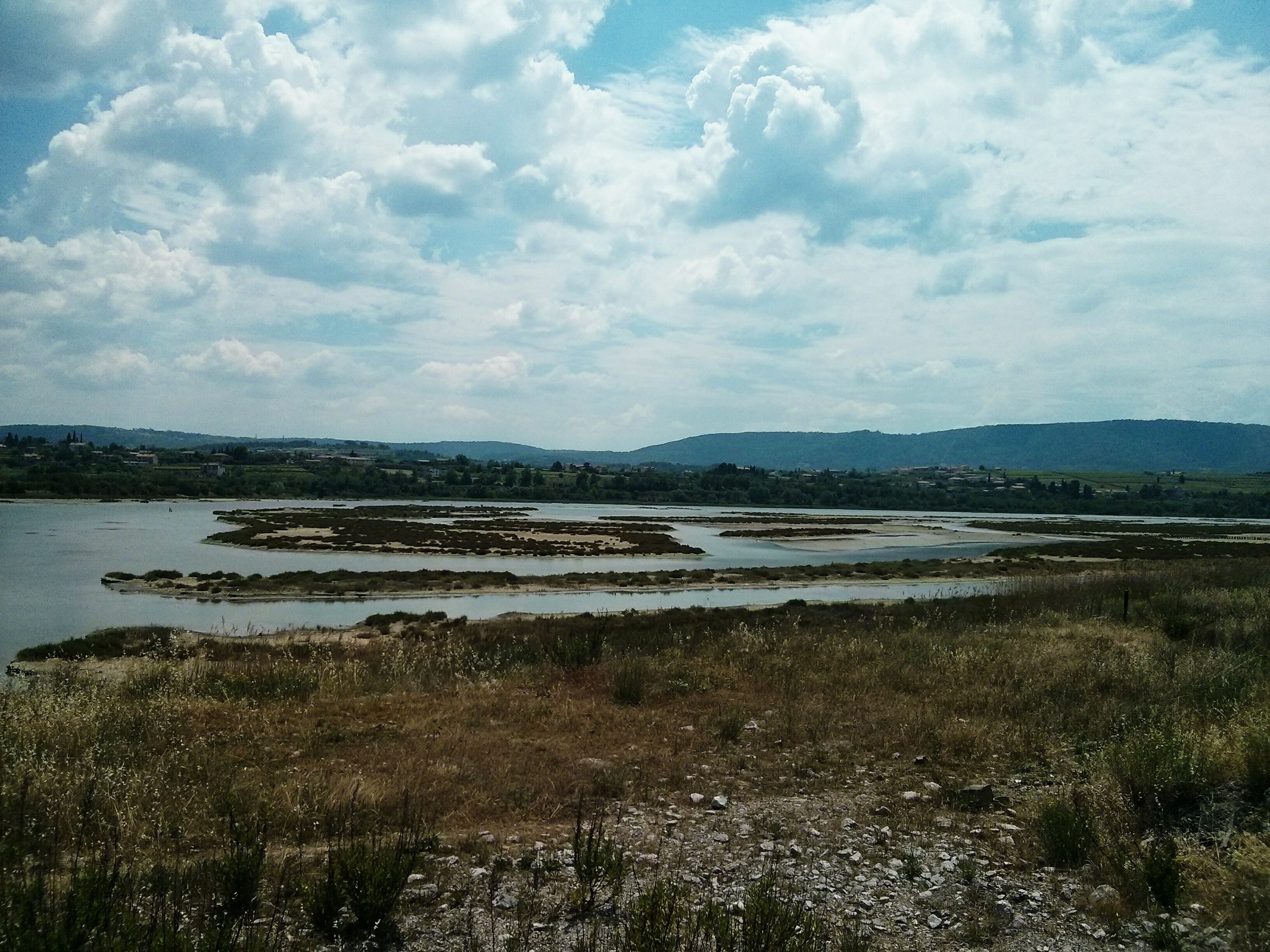
Within sight of the cranes of the Port of Koper lies what biologists present as one of the most successful cases of renaturation in Slovenia. Most visitors do not know that Škocjanski zatok was built from nothing. After the area was protected as a nature reserve in 1998, heavy machinery removed 180,000 cubic metres of mud. Embankments, islets, lagoons and paths were made; glassworts, shrubs and marsh plants were planted; Camargue horses were brought in from the marshes of the Rhône. I spent several days there for a newspaper feature in 2010.1 Some 225 bird species have been recorded in the reserve.
A forgery?
The philosopher Robert Elliot would be suspicious. In his article Faking Nature he rejects the idea that we can destroy an environment and then restore it. What the engineers propose, he argues, is that we accept “a fake or a forgery instead of the real thing”.✓2 His analogy comes from art. An exact replica of a destroyed Vermeer is still a disappointment, because the value of a work lies partly in how it came to be.
But Elliot imagines an ideal restoration, a case so rare it suits only philosophical articles. Most restorations do not bring back an earlier state. They create nature as ecologists, landscape architects and biologists picture it. Škocjanski zatok is such a creation. If anything, it is not nature but a postcard: an assemblage of elements that work well in a carefully controlled environment.
Restoring and falsifying
And yet I cannot call it bad. The new plants and birds mostly settled there of their own accord. Once the conditions were in place, black-winged stilts nested the very next year. Would it be better if they were not there, out of vanity about whether the reserve is an artefact? Like the philosopher Kante, I find that such projects can be closer to repairing a damaged work of art than to forging one.3
Renaturation is a living picture of a human vision. It restores and it falsifies at the same time. That may simply be what nature looks like now.
Read the full section in the dissertation