Bliss: The Hill a Billion People Remember
The most familiar landscape of our time was not found on a walk. It came with the computer.
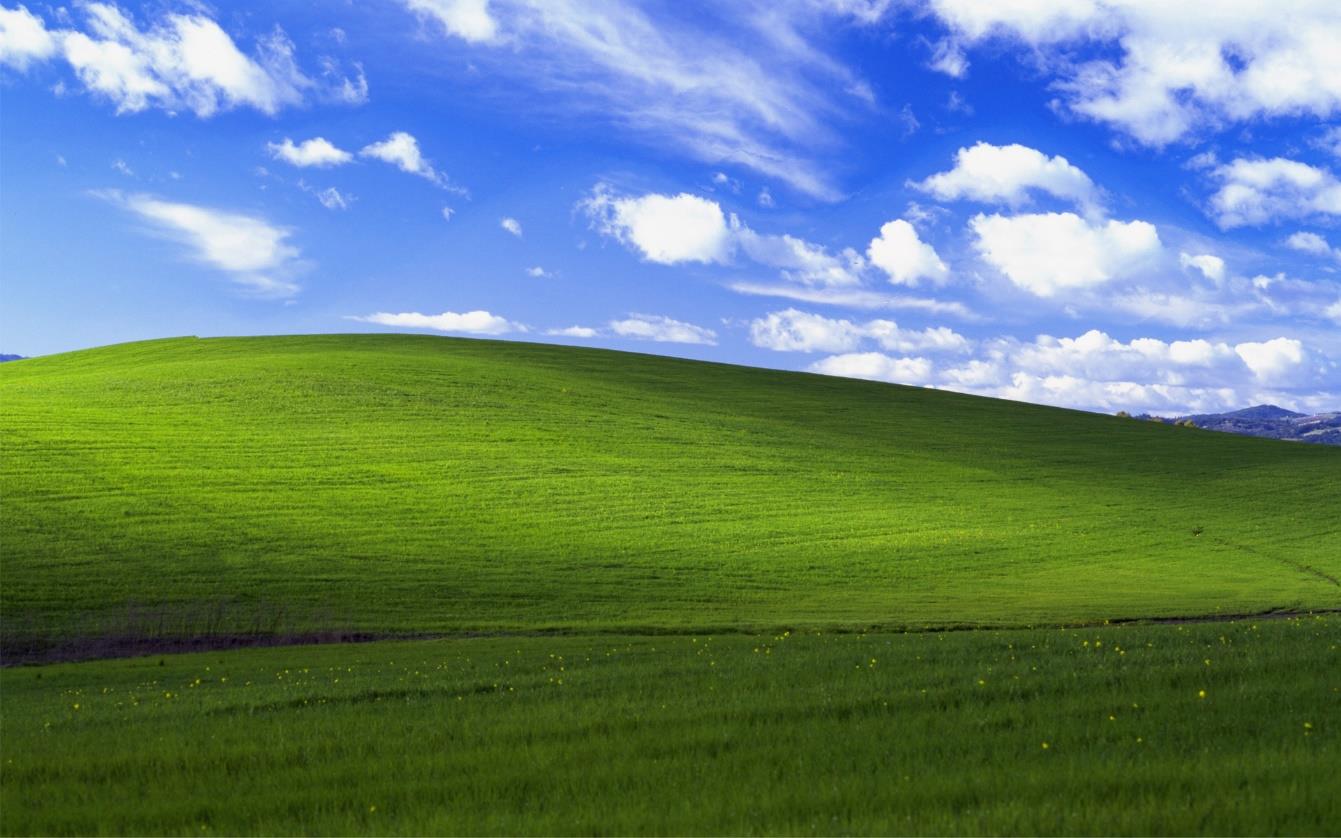
The inner landscape of many people today was not formed outdoors. It was formed by looking at a screen. From 2001 the default desktop of Windows XP showed rolling green meadows under a blue sky with gentle clouds, on computers used across different social systems, traditions and world-views.
The photograph is called Bliss. It is pleasant and soothing, and so unreal at first sight that it was hard to believe it had not been made with a computer program. Only when Microsoft ended support for XP, thirteen years later, did the company reveal who had taken it and how.1
The truth is plainer than the picture. Charles O’Rear, a former National Geographic photographer, took it in passing beside a busy road in Sonoma County, north of San Francisco, on Fuji colour film that he still had to wind by hand. It was never retouched with digital tools, not even after Microsoft found it in a stock-photo library. O’Rear has spotted it on screens in the White House and in footage from the Kremlin. Microsoft estimates that it has lodged in the memory of more than a billion people, and O’Rear himself is sure of it: “Anybody now from age 15 to the rest of their life will remember this photograph.”✓2
A taste, or a template?
Perhaps Bliss touches a taste for open green land that has stayed with us since time immemorial. Or perhaps it is a romantic pattern we like simply because we know no other. In the end that matters less than the fact that mass images of this kind have taken over the role once played by the Claude glass and tinted spectacles. They decide how we are to see nature, and what we are to notice in it.
The hills no longer look like that; they have since been planted with vineyards. The place still draws aspiring photographers, who wait there for the ideal conditions to make the picture again.3 We go to the landscape to copy its wallpaper. Above all, we now see nature through Windows.
Read the full section in the dissertation
Notes
- The story is also told in a short Microsoft film (MicrosoftNL, 2014). ↩︎
- Luckerson, 2014; wording checked against the original, see Sources & translation notes. ↩︎
- See the dissertation, chapter 1, note 11. ↩︎